Experts, Support Groups & Meet-Ups

While I’m not a huge one for “support” groups sometimes you just need someone to bounce things off of, ask questions, get a little motivation and most importantly not feel like you’re all alone.

I have just one word of warning for you on support groups – always be sure to educate YOURSELF and do NOT rely on information you receive in support groups as the be-all, end-all word on any topic.  You should always seek appropriate medical guidance or nutritional assistance over advice you find in support groups.  I’m saying this here because I’ve left many support groups because of wildly varying and inaccurate advice – I think they can be very dangerous and prefer to do my own research within the parameters of experts I trust, and when necessary discuss my concerns with the experts. You should know that even groups put together by the experts openly admit that they are NOT closely moderated, and that they rely on “peer-support” – so please BEWARE!

That said, I’m going to start with where to find expert advice.  Sadly you may have to search further than your G.P. or medical specialist.

Experts

Reliable Advice Online
There’s a LOT of information out there … and while Google is a wonderful thing, it is so easy to spend copious amounts of time trying to sift through the good, the bad and the down-right scary!  I can tell you from experience you’re better off to find a few exceptional resources and stick to them like glue for your information.  Sure, from time to time you may need to branch out, but if you have a solid foundation of online resources that you know are reliable you’ll save yourself valuable time and precious energy.

My top-2 recommendations for exceptional, reliable AIP information online are:
Autoimmune Wellness
Phoenix Helix

You’ll find a few key articles on the Resources Page listed under the title Advice for Beginners.

Functional Medicine Practitioner
As with any significant dietary change, you should in fact only undertake the AIP at the recommendation of a trained nutritional coach or physician.

If you’ve only started on the AIP due to personal research and you’re unsure whether it’s right for you and your condition, I highly recommend you seek the advice of a Functional Medicine Practitioner.  You can find one near you using this listing – Functional Medicine Practitioner Listing, and you can read more about it here in my post – Finding Your Root Cause.

Paleo-Friendly Autoimmune Specialist MDs
Yes, they do exist, but they can be hard to find. Thankfully, Eileen at the Phoenix Helix has complied and maintains a list on her website – check it out here.

Personal AIP Health Coaches
If you know you need to be on an AIP diet but are struggling to personalize it to your own needs and health condition, you may want to consider the services of a Health Coach.  This listing will take you to a list of coaches certified by the experts in the Autoimmune Protocol – Certified AIP Health Coach Listing.

AIP Coaching Programs
Beyond hiring a personal AIP Health Coach there are some options for joining online guided group support programs. There are three that I recommend, plus one for autoimmune exercise – you can learn more about them on my Coaching Page.  The one you choose will depend largely on your comfort level with making diet and lifestyle changes and whether you’re a self-starter or need more of a support group surrounding you.

AIP Medical Research
I get asked by a lot of members joining our Facebook Group as to whether there is really any proof that the AIP works for autoimmune disease, and I always reply with an emphatic, YES! If you’re interested in learning more about the medical studies that have been conducted about the efficacy of the AIP, you can keep up to date via the Autoimmune Wellness website here.

Living Matrix Health Timeline
Whether you’ve seen a Functional Medicine Practitioner yet or not, you’ve probably heard a lot about the importance of finding the “root cause” or “underlying cause” of your autoimmune disease.

To help you get the best support this little tool can help you provide your medical team with a thorough health history and potentially will help you find your root cause, making it easier to achieve healing.

The Living Matrix offers something called MyTimelineTM it’s a powerful tool that enables you to easily document the unfolding phenomena that lead to your ill health – a process that often occurs over many years, perhaps even a lifetime. It gives you and your practitioner the “Big Picture” so you can take the necessary steps to build back your health.

The process to complete your timeline can be long and require a bit of work, but it prompts you to think about your symptoms and issues and – just as importantly – when they may have begun. It also asks about key events in your life so that you can begin to see the patterns – it’s really very amazing!  The process was an eye opener to me and can really help your Functional Medicine Practitioner to quickly grasp your health history.  Click here to go to the access page and get started building your own timeline (don’t be afraid to add extra details you feel are important) – you’ll even be able to print out a summary when you’re complete. You can read more about it here in my post – Finding Your Root Cause.

Meet Ups & Support Groups

Location Specific Groups
Looking for support and want to connect with fellow AIP-ers in your own local area? Maybe you need advice where to find AIP compliant ingredients locally but are having a hard time – who better to ask than someone that lives in your area!
Be sure to check out this comprehensive list of support groups compiled by Autoimmune Wellness … it’s wonderful!
You can find a full list here – they’re constantly updating this, so just select the latest list.

Basic AIP Support Groups – NOT closely moderated – they all leave me wishing I could find a good one to suggest to you:
AIP Support
Strict AIP Support A-Z
AIP Elimination Diet Support Group

Topic-Specific Groups
Emotional Autoimmunity Website – Navigating the Emotional Side of Life with Chronic Illness – there used to be a support group but it has been closed down – probably too much work because this one WAS closely moderated.
Facebook – AIP Instant Pot Recipes
Facebook – Coconut-Free AIP Recipes Group – If you have an allergy to coconut but need to stick to the AIP Diet, you may wish to try this group.
Facebook – AIP Canning, Preserving, Dehydrating and Fermenting 
Facebook – Low Histamine AIP
Facebook – AIP During Pregancy and Breastfeeding
Facebook – Low FODMAP Recipes & Support – NOT AIP but you may find it helpful

Motivation

If you haven’t already read my motivational message, be sure to visit the page by clicking this link.  It may just be what you need for a little pick-me-up, and it also directs you to my article on the stages of grieving over illness.

This post contains affiliate links.  Click here to see what that means.

Managing a restricted diet while travelling is a hot topic.  Thankfully there are plenty of resources to help you make your next trip a success.  Below you’ll find a collection of great tips and tricks for how to stick to the AIP when you’re away from home.  What ever you do don’t leave home without preparing … you can’t count on finding AIP compliant food on your travels.


“Failing to plan is planning to fail.”

Conveniences:

AIP Meal Service! Autoimmune Protocol meal made by real chefs delivered to your door. SAVE with my couponWhen you’re on the road or enjoying a holiday, the last thing you want to do is cook — but staying AIP compliant is still important. That’s where Urban AIP comes in. Simply pack a cooler full of their hand-prepared, nutrient-dense, flash frozen meals to give yourself a real break from the kitchen without compromising your protocol. Sure, it’s a little more than stopping at your local fast-food joint, but your health is worth it, and having nourishing meals ready to go makes travel a whole lot easier — and a lot more enjoyable. 

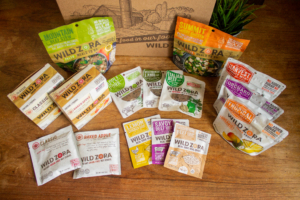
Wild Zora AIP foods on the go https://www.awin1.com/cread.php?awinmid=78890&awinaffid=2234611 - aiprecipecollection.comLooking for more great convenience foods to pack for your travels, visit our Food Sourcing page for lots more great ideas and reliable AIP shops – in this case, be sure to check out Wild Zora (they have some very tasty free-dried AIP stews, soups, instant no-oatmeal, meat bars, etc.), Serenity Kids food pouches make great snacks for kids AND adults, my AIP Amazon Storefronts.

You can find more ideas and discounts in my AIP Snack Guide – click here, and be sure to check out my AIP Amazon Storefronts too – you’ll find snacks, pantry items and sustainable living options for your travels, like stainless steel bento box sets, electric lunch boxes and so much more!  Shop Here: USA / Canada / UK

Self-Catered Vacations:

Since I went gluten-free many years ago I’ve found vacations much more enjoyable when I know I’m in complete control of my food.  One way we do that is to take self-catered vacations.  You can read more about this on our travel blog – What’s Your Holiday Style? ❀ All-Inclusive ❀ Hotels & Restaurants ❀ Self-Catered ❀ and an early article I wrote about Travelling with Food Allergies.  I really do need to write a dedicated post about travelling while on the AIP … one day!

For us, Airbnb, Booking.com and Cottage Rentals have been a life saver!  Having a fully equipped comfortable kitchen in our own little cottage or apartment makes all the difference in the world … and we’ve enjoyed travelling in Canada, USA, the Caribbean and Europe all while sticking to my restricted diet. 

I’ve also found a very helpful group on Facebook that you may want to consult for some details and suggestions on various destinations – Allergy Travel Groups helped me a lot when it came to taking food on the plane for International travels, and they’re helpful for lots of suggestions!

Looking for more articles and tips?

Dining Out on the AIP
Surviving Social Life on the AIP
AIP in an Emergency – Tips for Power Outages & Natural Disasters – Might help campers too! 

Autoimmune Wellness:

Travel Food Tips While On The AIP
Guide to AIP Travel:  Road Trips
Guide to AIP Travel:  Flying
Guid to AIP Travel: International Trips
Seven Reasons Why Camper Van Travel is Compatible with the AIP

Phoenix Helix:

Miscellaneous Sources:

Navigating a Cruise on the AIP
How to Eat Healthy While Travelling on a Restricted Diet

Recipes:

You guessed it, try our searchable Facebook Group – click these quick links for #onthego #travel #snacks to get started. Sign up here, and try searching for specific recipes such as fat bombs, muffins, meatballs, jerky, granola, etc. You’ll even find campfire bananas, s’mores and more – The options are endless!


You’ll hear me say it again and again, “Failing to plan is planning to fail.” There’s seriously nothing worse than getting caught completely exhausted with nothing to eat and nourish yourself.

Batch cooking and meal planning are two wonderful ways to make your AIP life easier!

Love it or hate it, on this protocol we all have to cook. If you want to cut down on the days you spend in the kitchen – learn to incorporate batch cooking and meal planning into your life.

Success on the AIP is so much easier when you have a few good tips, tricks and tools under your belt (spoiler alert – there’s an app that’s a game-changer on the AIP – RealPlans and you can read about it in my review here) it could save your sanity on the AIP! Visit my Meal Planning page – click here for lots of information and resources.

Where Else Can I Find Meal Prep & Batch Cooking Recipes?

Many recipes can be adapted for batch cooking just by doubling the quantities.  Some are perfect for dividing up into pre-portioned containers (meal prepping) for lunches, breakfasts and snacks on the go.  With the AIP you’ll find the need to think outside the box a little, but once you get used to it you’ll find it a breeze!

For more batch cooking recipe ideas, try searching in our Facebook Group – try search terms like “batch cook” or “sheet pan” or “freezer dump” or “meal prep” or simply look for things like whole roasted chicken or beef roasts and sides that can be used for multiple purposes or portioned out for later use.

For detailed posts about freezer cooking and batch cooking, check out Mickey Trescott’s AIP Freezer Cooking Guide, and Batch Cooking 101 – she’s my go-to on the topic if you want some great tips and tutorials. You’ll also enjoy the post by Angie Alt, Time Management in the Kitchen. These great extra tips and tricks will help you even more and be applied within your RealPlans app… You honestly can’t help but be winning at the AIP by pairing this combo!

This post contains affiliate links.  Click here to see what that means.

When you start the AIP you’re likely going to read a LOT about bone broth and the gut-healing benefits.  You may even be encouraged by your health coach, nutritionist or functional medicine practitioner to start with a very limited diet that includes homemade bone broth as part of a nutrient-dense, healing diet while you give your body a chance to heal.

For some, this is a daunting thought – home-made broth, sourcing high-quality ingredients, the time involved … Yikes! 

Don’t freak out though, it’s not really that hard, and there are excellent options below if you just can’t bring yourself to make your own.

Hold tight … this is gonna be a long one! We’re going to cover everything from soup to nuts (errrr, tigernuts?) in this FAQ post.

Here we go!

Bone Broth FAQs

What are the benefits of bone broth?

Bone broth is a nutrient-dense food that provides collagen and gelatin, along with amino acids such as glycine and proline. These amino acids are important building blocks for connective tissue and are involved in maintaining and repairing tissues throughout the body.

The gelatin and collagen in bone broth are particularly interesting when you’re following the AIP because of their role in supporting the gut lining. Glycine and proline are also involved in digestion, immune function and tissue repair, which is one reason bone broth has traditionally been considered such a valuable food for supporting gut health and healing.

Bone broth also contains minerals such as calcium, phosphorus, magnesium and potassium, although the amounts can vary considerably depending on the bones used and how the broth is prepared. I wouldn’t rely on bone broth as your primary source of minerals, but they are certainly a welcome bonus.

Bone broth also contains compounds such as chondroitin sulfate and glucosamine, which are well known for their potential role in supporting healthy joints. Collagen-rich foods have also been studied for their potential benefits for joint discomfort, bone health and the health of skin, hair and nails.

In other words, there’s a good reason bone broth has been such a staple in traditional cooking for generations. It’s an easy way to add collagen, gelatin and amino acids to your diet, while also making use of parts of the animal that might otherwise go to waste.

Can I buy broth from the grocery store?

Well … sort of. If you’re following the AIP, you do need to be a little more particular about the broth you buy.

Most of the chicken or beef broth you’ll find in a regular grocery store isn’t what I’m talking about when I recommend bone broth. Many conventional broths are relatively thin and don’t contain much gelatin, and some contain ingredients that aren’t AIP-compliant, such as pepper, nightshade spices, or other additives, flavorings, and even preservatives that may contain gluten. So don’t just grab the first carton that says “broth” or “stock” on the label and assume it’s suitable for the AIP.

What we’re looking for is a true bone broth, ideally one that’s made with bones and connective tissue and cooked long enough to extract the collagen and gelatin. That’s the good stuff we’re after!

If you don’t have the time, inclination, or freezer space to make your own, don’t despair. There are some excellent commercially prepared bone broths available. You’ll generally have better luck finding them at natural or specialty grocery stores, such as Whole Foods, or ordering directly from specialty retailers online.

And this is one place where I’m happy to help you do the shopping! I’ve put together AIP-friendly options in my Amazon AIP Storefronts, and you’ll also find some of the brands I recommend below. Just remember that formulations can change, so always check the ingredient list before buying.

Homemade is still my first choice because you control the ingredients and can make a beautifully concentrated broth for considerably less money. But a good-quality, AIP-compliant store-bought bone broth is a perfectly reasonable shortcut when homemade isn’t happening. Sometimes convenience is exactly what we need to keep moving forward.

Where do I get bones?

Your local butcher, a local farm (ask around at the farmers market), a friendly hunter, your local health food store or even an Asian market. You can also save the bones if you roast a whole chicken, turkey, duck, or goose. In fact, don’t overlook the bones left over from bone-in steaks, ribs, pork chops, etc. Toss them into a freezer bag and save them until you have enough for a batch of broth.

If you’re buying bones, ask your butcher or farmer if they sell them in bulk. You may be surprised at what they have available! Sometimes bones are sold as “soup bones” or even “pet food bones.” Beef knuckle bones are particularly good for making broth, and chicken feet, beef feet or oxtail will give you plenty of gelatin.

Don’t have a good local source? My affiliates at US Wellness Meats offer some excellent options. Shop here and save 15% with my code: AIP15

Do I have to use grass-fed or pastured bones, or organic bones?

Ideally, yes. When you’re making a concentrated food like bone broth, I think it’s worth seeking out the best-quality bones you can reasonably afford. Look for bones from grass-fed, pasture-raised, and/or organically raised animals when possible.

That doesn’t mean you need to panic if you can’t find or afford the perfect bones (I know, they’re not cheap!). Bone broth is still a wonderfully nourishing food, and I’d rather see you make broth with the bones you can get than never make it because you couldn’t find the “right” ones. If you have a choice, though, I’d choose bones from healthy, well-raised animals.

Your local farmer or butcher is a great place to start. And if you’re buying bones in bulk, ask about how the animals were raised. You may find that the bones are surprisingly affordable, especially when you’re buying directly from the source.

What kind of bones should I use?

You can use bones from just about any animal—beef, veal, lamb, bison or buffalo, venison, chicken, duck, goose, turkey, pork, or fish. And don’t worry about finding the “perfect” bones. A variety is actually a good thing!

If you’re buying bones specifically for broth, I like to use a combination of meaty bones, marrow bones, and gelatinous bones. Meaty bones add flavor, marrow bones provide nutrient-rich marrow, and bones with lots of connective tissue and cartilage—such as knuckles, oxtail, and chicken or pork feet—are particularly good sources of collagen and gelatin.

You can mix and match bones in the same batch of broth … some beef, some lamb, some chicken … but be aware that it will change the flavor. Most folks prefer to stick to one animal source at a time.

Top Tips:

  • You can reuse bones after they’ve made a batch of broth. If they’re still intact, save them for another batch, but ideally you’ll want to add some fresh bones as well. This will help maintain the flavor and give you more fresh cartilage and connective tissue to contribute collagen and gelatin to the finished broth.
  • You can repurpose cooked bones from other meals. Save the bones left over from cooking bone-in meat (hello chicken from Sunday supper, Thanksgiving turkey or bone-in ham!) and keep them in a bag in the freezer. Once you’ve accumulated enough, toss them into your next batch. Mickey Trescott says she does exactly this, and I’ve always loved that approach because it makes good use of something you’d otherwise throw away.

What about the old concerns about bone broth?

You may have also heard some of the older warnings that bone broth is “dangerous” because of the fat, glutamate, or heavy metals that might be released from the bones. These concerns made the rounds quite a bit online, particularly in the early days of the AIP.

The research doesn’t support the idea that properly prepared bone broth is inherently dangerous because of these concerns. Studies have found that bone broth does contain glutamic acid, but that doesn’t mean it contains dangerous amounts of free glutamate or that the glutamate will somehow bypass your body’s normal regulation. Likewise, although lead can be detected in some bone broths, the amounts found in the studies that prompted these concerns were not at levels considered unsafe for drinking water.

That said, quality still matters. Choosing bones from well-raised animals and using good-quality water are sensible precautions, particularly if you’re making broth regularly. And if bone broth consistently makes you feel unwell, don’t force yourself to drink it simply because it’s considered a “healing” food. Individual food sensitivities are a real thing.

Do I have to skim the fat?

Only if you want to. Feel free to drink your broth as-is, or skim off some or all of the fat if you prefer a less fatty broth.

After you’re done cooking, strain your broth as usual and let it cool in the fridge for several hours. The fat will rise to the top and harden, making it easy to scrape off with a spoon.

You don’t have to remove every last bit, though. A little fat floating on the surface is perfectly fine.

Personally, I like to remove most of the fat before drinking my broth. I don’t worry about getting every last little bit of it I’m going to be using it in other recipes. There’s honestly no need to make yourself crazy over it!

What kind of ingredients can I add to my broth to help with the flavor?

Before we get into flavor, ask yourself what you’re going to use the broth for.

If you’re going to be using it in other dishes, there’s something I really like about Mickey Trescott’s approach to bone broth. Her idea is that rather than loading your broth up with lots of herbs, spices, and vegetables while it’s cooking, you make a basic, neutral broth that you can use in all sorts of ways later. Then, when you’re ready to drink it or use it in a recipe, you can season it according to what you’re making.

A neutral broth can become soup, gravy, sauce, or simply a warm mug of broth without the flavor of rosemary, sage, or ginger dictating where you can use it.

However! That doesn’t mean you can’t add things while your broth is cooking. Especially if you’re like me and you tend to make whole batches just for sippin’!

If you like a more flavorful broth right from the start, there are plenty of AIP-friendly options to add:

  • Onion
  • Green onion
  • Leek
  • Carrot
  • Garlic
  • Celery
  • Salt
  • Parsley
  • Bay leaf
  • Rosemary
  • Thyme
  • Sage
  • Ginger (my fave!)

If you’re following the Core AIP, remember that some seasonings you might normally reach for, such as black pepper, peppercorns, and red pepper flakes, aren’t included during elimination. If you’ve reintroduced them or you’re following a Modified AIP approach, your options may be different.

So there’s really no right or wrong answer here. Keep it basic if you want a versatile base broth, or add some flavor if that’s how you prefer it … You do you!

Budget Friendly Tip: I personally like to keep a bag of veggie scraps in the freezer and toss them into my broth when I’m making a batch. It’s an easy way to add some flavor and make use of things that might otherwise end up in the compost.

Why add vinegar to the broth?

Adding an acid, like lemon juice or vinegar, will help to extract minerals from the bones. Use a mild-flavored vinegar, like apple cider vinegar, as white vinegar may taste too harsh in a mellow broth, not to mention it’s not included during the elimination stage of the AIP.

You don’t need much. A splash is all you need to help with the mineral extraction without making your broth taste like vinegar!

Should I roast my bones first? 

You can, but you don’t have to!

Roasting the bones first will give your broth a deeper, richer flavor and darker color, but it doesn’t make the broth more nutritious, so it really isn’t necessary. 

Personally, I don’t bother unless I’m using something like beef bones. It’s an extra step, and I prefer to work smart, not hard! 

If you’d like to roast them, spread the bones on a baking sheet and roast at 350°F for about 30 minutes before adding them to your pot.

Does it really have to jiggle?

If you’ve ever put your cooled bone broth in the fridge and discovered that it has turned into a wobbly, jiggly, almost Jell-O-like substance, congratulations! That’s the jiggle we’re looking for.

That lovely wobble comes from gelatin, which forms when collagen from the bones and connective tissue breaks down during cooking. When the broth is warm, the gelatin is dissolved in the liquid, so your broth will look … well, like broth. Once it cools, the gelatin sets and gives you that characteristic jiggle.

But don’t panic if your broth doesn’t gel! A broth that stays liquid when refrigerated isn’t a failure, and it doesn’t mean there’s no gelatin in it. How much gelatin ends up in your broth depends on the types and amount of bones you use, as well as how much water you add. Bones with lots of connective tissue and cartilage, such as feet, knuckles, and oxtail, are especially good choices if you’re after a nice, gelatinous broth.

You can also concentrate your broth by simmering it uncovered for a while after cooking to allow some of the water to evaporate. This can help give you that thicker, more concentrated result.

And remember, the jiggle isn’t the goal all by itself. Don’t toss a perfectly good batch of broth just because it didn’t turn into Jell-O in your refrigerator. Drink it, cook with it, and try adding more gelatinous bones or less water next time if you want more jiggle.

How long should I cook my bone broth?

It really depends on how you’re making it! There’s no magic number of hours that applies to every pot of bone broth, and just about every recipe recommends something different. Here are a few general guidelines:

On the stovetop: Plan on a good long simmer. Around 8–24 hours is a reasonable range for beef, chicken, pork, and other meat bones. You can certainly stop sooner if your broth looks and tastes good, but longer cooking gives the connective tissue more time to break down. Keep an eye on the water level if you’re cooking for many hours, especially if your pot doesn’t have a tight-fitting lid.

In a pressure cooker or Instant Pot: This is where things get considerably faster (and the main reason I decided to invest in an Instant Pot). About 90 minutes at high pressure is enough for a good batch of bone broth, according to Mickey Trescott. She has also said that she doesn’t find much benefit in extending the cooking time beyond about two hours, which is good to know … because I tend to go overboard and max it out at four!

In a slow cooker: You can use the same basic idea as stovetop cooking and let your broth simmer for many hours. The advantage here is mostly convenience: set it up and let it do its thing while you get on with your day. Just make sure you follow your slow cooker’s instructions and keep an eye on the liquid level during a long cook.

Fish bones are a different story. They’re much smaller and more delicate, so they don’t need anywhere near as long. Mickey recommends roughly 30–45 minutes for fish broth.

And remember what we talked about above: don’t judge your broth solely by the clock. If you’ve cooked it long enough to get the flavor, body, and concentration you’re after, you’re good to go. If it doesn’t gel when chilled, that doesn’t necessarily mean it needed another twelve hours in the pot!

What about histamine?

You may have heard that bone broth cooked for many hours is automatically high in histamine. This is a common claim, but the science isn’t quite that straightforward, and there isn’t a well-established cooking time at which bone broth suddenly becomes “high histamine.”

That said, if you know you’re sensitive to histamine, you may find that shorter-cooked broth works better for you. Pressure cooking is one option to get a flavorful, gelatin-rich broth in considerably less time. It’s also a good idea to cool and refrigerate or freeze your finished broth promptly rather than letting it sit in the fridge for days.

As with so many things on the AIP, pay attention to how your body responds. If a 24-hour pot of bone broth leaves you feeling lousy, you don’t need to force yourself to drink it just because someone on the internet says longer is better!

What do I do with my broth?

Congratulations!! You made your first batch of bone broth … now what!?

The simplest answer? Drink it!

Pour yourself a mug, warm it gently if you’re not taking it straight out of the pot, and sip it just as you would tea or coffee. You can add a little salt or season it to taste, especially if you’ve made a fairly neutral base broth.

Confession time. I have to admit that when I was first diagnosed with my autoimmune digestive disorder I couldn’t stomach the thought of making or consuming bone broth … even though it was the most delicate choice on the menu at the time. If this is you, be sure to zhuzh it up! My favorite add-in is a small nub of ginger during the cooking phase. If you didn’t do that, try some ground ginger and powdered garlic … maybe a little extra salt. I also enjoy mine more when it’s not piping hot, and my body even craves it now! If it’s not love at first sip, don’t throw it out!

Drinking it isn’t your only option. Bone broth is incredibly useful in the kitchen and can be used anywhere you’d normally use stock or broth, and honestly, soooo many recipes call for a splash here and there! You can also sub it into savory dishes that call for water, and yes, you can even use it in an AIP smoothie! … say what!?

Try it in:

  • Soups and stews
  • Gravies and sauces
  • Braises
  • Cooking vegetables
  • Cooking meat
  • Making mashed vegetables
  • For cooking rice or other pseudograins, if they’re part of your diet

TIP:  If you’ve made a concentrated broth, you can dilute it with a little water when you need a larger amount than you have on hand.

What is meat stock?

You may also come across the term meat stock when you’re researching bone broth. So what’s the difference?

Meat stock is similar to bone broth, but it’s cooked for a much shorter time and is made with a higher proportion of meat to bone.

While bone broth is typically simmered for many hours to extract collagen, gelatin, and other compounds from the bones, meat stock is usually ready in just a few hours and relies on flavor from the meat itself.

You’ll sometimes see meat stock recommended as an alternative to bone broth, but they’re really two different preparations, each with its own place in the kitchen. Just remember, meat stock isn’t what we’re after when we’re talking about bone broth.

If you’d like to try meat stock, I’ve included a recipe in the recipe section below. Sometimes it’s nice to have options!

A big problem I have with meat stock is the cost. Typically bones are more budget-friendly, so there’s that! If you make meat stock and want to stretch your dollar, try this!

Remouillage is the traditional technique of making a second, lighter stock from bones that have already been used. Learn more about remouillage and get an easy recipe here. Just leave out the tomato paste to keep it AIP-friendly.

How should I store my broth?

Once you’ve made your broth, you’ll want to get it cooled and stored properly. If you’ve made a big batch, divide it into smaller containers so it cools more quickly, and get it into the refrigerator or freezer promptly. Safe food handling recommendations advise meat broth, stock and gravy can be stored in the refrigerator for 3–4 days.

For the refrigerator, my go-to is glass Mason jars with sealing rings. I like them because they’re reusable, easy to label, and the tight seal helps protect the broth from air and other refrigerator odors while keeping it nice and fresh. I find that a good seal helps me extend my storage time, but don’t risk it!

If you aren’t going to use your broth within a few days, freeze it.

For the freezer, I love Souper Cubes. They’re designed for freezing food in convenient portions, so you can freeze your broth, pop out what you need, and leave the rest in the freezer. They come in several sizes, which is especially handy because not every recipe calls for the same amount of broth.

If you prefer to freeze your broth in glass jars, there are a few important things you need to know. I’ve covered all of those tips and tricks in my Food Storage Basics post, so be sure to have a look before you decide what containers to buy. 

When it comes to freezer storage, food safety guidelines recommend using frozen meat broth within 4–6 months.

One last tip: Label your containers with the date before they go into the freezer. Future-you will thank you!

Bone Broth Recipes

Chicken Bone Broth (be sure to use the giblets, etc. for nutrient density and flavor)
Fish Bone Broth
Beef Broth (lamb can be used too)
Instant Pot Bone Broth
Instant Pot Beef Bone Broth (my favorite!)
Veggie Bone Broth
Meat Stock
Turmeric Ginger Bone Broth Smoothie Bowl (check my coupons for up to 35% off the collagen you need for this recipe)
Blueberry Cardamom Bone Broth Smoothie (omit cardamom unless you’ve reintroduced, and get a discount on protein powder here)

For More Bone Broth Recipes and ways to use it (soups, stews, smoothies and more) please use the group search function in my AIP Recipe Collection Facebook Group.

No Time for Bone Broth?

aiprecipecollection.com - SAVE 10% off EVERY brand, EVERY day! Stackable on Volume Discounts!Many people tell me they just don’t have time to make bone broth or they just can’t stand the whole process.  Fortunately, there are some options for quality bone broths that are AIP compliant.

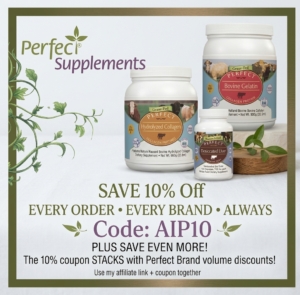
Perfect Supplements carries powdered bone broth and so much more! Shop with my link and Code AIP10 to SAVE 10%  … AND MORE on VOLUME discounts of Perfect Brand products!

Wild Zora offers wildly DELICIOUS pre-made freeze-dried soups and stews! They don’t have plain bone broth but thought I’d recommend them here since so many that are prepping bone broth are using it to make their own homemade soups and stews or are looking for on-the-go convenience.
(Be sure to grab a coupon code from our coupons page.)

More pre-made bone broth suggestions on Amazon – USA / Canada / UK

 

This post contains affiliate links.  Click here to see what that means.

Tea for Two?

There’s been some confusion around tea and caffeine and the AIP, so let’s clear things up, shall we?

According to Autoimmune Wellness in their article What’s IN and What’s OUT on AIP? Answers to Tricky Foods (click the link to read the whole article):

Caffeinated Tea (Green or Black)

AIP is a coffee-free, but not a caffeine-free protocol. Green and black teas can be consumed, but due to the caffeine it’s generally advised to drink them earlier in the day and in moderation. It is also important to read labels carefully, as many teas have soy lecithin or other additives (or toxins) that are avoided on AIP. If adrenal fatigue is part of your health picture, you’ll want to work to eliminate caffeine entirely.

VERDICT: Caffeinated teas are elimination-phase legal.

Rooibos Tea — Again, rooibos is part of the larger legume family, but gets a pass. In this case, we only consume the leaves. It should be noted that, like carob, it is recommended to consume rooibos tea in moderation.

VERDICT: Rooibos tea is elimination-phase legal.

What About The Caffeine?

If this makes no sense to you because we have to give up coffee on the AIP, you’re likely thinking that coffee is given up because of its caffeine content – am I right? Well, it’s time to clear that misconception up too! Coffee is eliminated because it is a seed, not because of the caffeine, so be sure to read more about that in my post “Kicking the Coffee Habit.”

Still Confused?

If you’re still a little overwhelmed by all this, the best bet is to stick to true herbal teas that are derived from leaves or flowers instead of seeds and pods – think peppermint, chamomile, spearmint, lavender, etc. Ginger is a great option if it’s truly made from ginger and not flavors – in fact, quality and ingredients are important, so keep reading!

There are several recipes to make your own herbal teas from scratch (not difficult at all) posted in our Facebook Group – just try the search feature there – search tea or herbal tea.

What Brands Are Best?

Immune Supporting Pique Tea, Coupon Code, AIP Recipe CollectionAs mentioned above you’ll need to watch ingredient lists, and you’ll want to search for the best clean brands of tea on the market. It’s difficult for me to include a list for you as companies can change their products at any given time, but I try to keep my AIP Amazon Storefronts  upto date – USA / Canada / UK  

Pique Tea is a very well respected brand that prides themselves on the highest quality teas – you can read my post about Pique Tea here and how it fits into your AIP healing journey, or shop directly with our affiliate link by clicking here.

As always, the onus is on you to do a little research so you avoid GMO products and pesticide laden products – some use cornstarch in their bags and some contain soy and “natural” or artificial flavors – these are ingredients to stay clear of! Watch for certified organic products and check for sneaky non AIP ingredients and spices.


Chocolate – a topic near and dear to my chocolate-covered heart. 

For some, giving up coffee would be tough, for me, it was chocolate. Thankfully, I didn’t have to part with it forever — and maybe that bit of hope will be enough to get you through the AIP elimination stage too!

Things to Remember:

  • The AIP Core Elimination phase isn’t forever — reintroductions are part of the process, so take your time, but remember: for the love of chocolate, learn the AIP rules!!
  • Not everyone reacts to chocolate the same way! While dark chocolate is often hailed as a health food, some people (like me) react very badly to it. Strangely, I’m okay with chocolates that have a lower cacao content. Go figure! That brings me to my second point: AIP is meant to be personalized. Work carefully and intentionally toward reintroductions when the time comes, and make sure your AIP journey is truly customized to your body’s needs.

Modified AIP Elimination Option:

In January 2024, a Modified version of the AIP elimination phase was introduced. This optional modification allows for the inclusion of certain foods, including chocolate, during the elimination stage.

While this might sound like a tempting option, I encourage you to consider starting with the full Core Elimination phase if it’s accessible to you. Doing so will give you a solid baseline to track your body’s reactions to foods, and provide your body with the time it needs to rest and recover before you reintroduce any foods.

That said, choosing between the Core or Modified elimination phases depends largely on your individual health needs. If you have digestive issues or compromised gut health, the Core Elimination phase may be a better starting point. Always consult with your healthcare practitioner to determine the best approach for you.

For more information about the Modified AIP, click here. To learn about the differences between Core and Modified AIP, click here.

Chocolate – Friend or Foe?

According to the Paleo Mom, there’s no scientific evidence linking nut or seed consumption to autoimmunity. However, they’re on the AIP “no-no” list because they can be difficult to digest, and digestive issues are common for those with autoimmune conditions.

So, if you’re following AIP, eliminate cocoa for at least 30 days (or anywhere from 30-90 days depending on your unique journey). After that, try reintroducing it to see if it’s something your body tolerates. And if you’re missing the taste of chocolate during that period, carob can be a helpful AIP alternative! But remember… this doesn’t mean you should go CRAZY with chocolate after those days are up, folks!

I highly recommend reading more about chocolate in this must-read article by Eileen Laird over at Phoenix Helix, “Chocolate – Friend or Foe?” [click here]. It takes a deep dive into whether chocolate is beneficial or harmful within healing diets like AIP.

IMPORTANT: Not all chocolate is created equal. When you’re ready to reintroduce, this article will guide you on selecting the best options. And of course, as always, moderation is the key to keeping your body happy and healthy.

The Alternative

Life without chocolate doesn’t have to be all that bad. Let me introduce you to the best alternative — one I’ve grown to absolutely love: Carob!

I can already hear the nay-sayers, but trust me — I remember carob bars from my childhood, and let’s just say they didn’t leave a great impression. But real carob is nothing like that! When you use it right, I think you’ll come to love it too. It’s delicious! In fact, I’ve even chosen carob over reintroduced cocoa in some recipes!

If you’re in the elimination phase of AIP, or if chocolate doesn’t sit well with you, toasted carob is a great option! Seriously, it’s not so bad — I’ve found amazing carob recipes that I regularly serve to non-AIP folks, and they have no idea they’re not eating chocolate!

You’ll find lots of great carob recipes in our Facebook Group – just use the search function in the group and enjoy your carob in moderation.

Looking for quality carob or cocoa and cacao if you’re started reintroductions? Visit our Food Sourcing page for these and so much more!

This post contains affiliate links.  Click here to see what that means.

Feeling privileged to be featured in the July 2018 Autoimmune Wellness Kitchen Tour!

What is Kitchen Tour?

Kitchen tour is one of the many resources at Autoimmune Wellness that I encourage folks to check out. If you’re interested in learning how to set up your kitchen for AIP, what changes you might need to make, suggested appliances, tools and gadgets for the job this resource is for you!

If you’re interested in catching a glimpse inside my humble little kitchen (well – my previous kitchen), reading a bit about my personal health journey and suggestions for those starting out on the AIP I invite you to take a read…

Gail’s AIP Kitchen:

How She Manages Hashimoto’s & Eosinophilic Gastroenteritis in Ontario

Originally Posted July 6, 2018 on AutoimmuneWellness.com 

AIP Kitchen Tour is a monthly feature in which we profile a member of the AIP community and their kitchen setup in hopes that it will further inspire us to get our kitchens organized and set up for success! We’ve interviewed folks who are making the AIP lifestyle a reality in everything from college dorms and small city apartments, to large households with non-AIP family members, and everything in between. Through these interviews, we hope to share how they make it happen across a variety of budgets and living situations, and give the community a wealth of inspiration. Read more Kitchen Tours here!


Gail Shankland, aiprecipecollection.comName:  Gail Shankland

Location:  Ontario, Canada

AI Disease:  Hashimoto’s and Eosinophilic Gastroenteritis (a rare digestive disorder)

How long have you been eating AIP? Just short of a year. I began shortly after my diagnosis in spring of 2017.

Have you successfully reintroduced any foods?
Happily, Yes! It was important for me to try adding nuts (not peanuts) and seeds back into my diet as soon as I felt up to it. I needed every major source of protein I could get my hands on (in addition to meat), as my digestive disorder was causing severe nutrient deficiencies and protein loss with edema that my doctors couldn’t figure out. Fortunately I don’t seem to have much of a problem with nuts and seeds and spices derived from them, so I’m very grateful — this opens up a lot of options for me.

Chocolate! Yes — my beloved chocolate is my friend too. I’m oddly not great with the really dark chocolate they say is healthiest, but can happily have a little gluten free semi-dark to milk chocolate without any problems.

Chickpeas were added back fairly early on, and while I miss lentils and beans I’m not ready to jump back into that just yet.

I have no intention to go back to being a regular consumer of eggs (I believe eggs to have played a big role in the my autoimmune bucket overflowing), or dairy (I’d already removed that from my diet prior to going AIP), though I can use ghee occasionally without any issue, and I don’t get too concerned about friends and family adding butter or a splash of milk to a dish they’re serving me.

I’ve been fortunate to have the occasional gluten-free treat without incident, so I’m thinking eggs in baked goods and grains in extreme moderation are probably also going to be just fine.

I miss tomatoes — we used to eat a lot of them in sauces. I’ve tried fresh tomatoes and tomato paste in small quantities and had no real issues, but I’m going to refrain from overindulgence for sure. But what a treat to have a little tomato paste on an AIP pizza!

Next up will be some of the nightshade spices — my hubby and I LOVE spicy foods, so it will be nice to try that and hopefully start having the odd spicy dish in moderation if all goes well.

How has the AIP changed your life?
I don’t quite know how to express what a dramatic change it’s made. Without it I might well be in hospital, on a feeding tube or elemental liquid diet, or at minimum having to attend a lot of doctors appointments where they wouldn’t be able to tell me much of anything.

My doctor is quite frankly astounded by the improvements to my health in just short of a year (all without traditional medical intervention beyond the diagnosis). Knowing little about my disease, the doctors and nutritionists at the hospital were stumped as to what to tell me to do, so they simply told me I should “Google it” and start learning about my disease (no joke — they told me that).

At the end of next month I’ll return to my specialist for my one-year follow up — a Gastroenteroligist who also had little to suggest for me and therefore didn’t invite me back any sooner than a year! I’m tempted to cancel the appointment because I don’t need his input, but I’m eager at the same time to tell him that controlling inflammation through diet and lifestyle is the answer, and that they should be learning more about this so they can help others. It’s not that hard — if I can do it, anyone can!

The list of improvements I’ve seen is a LONG one! My hair has grown back in (I lost at least 1/3 of it according to my hairdresser), my fingernails and toenails have all grown back (after having fallen off due to malnutrition), I’ve got my sense of taste back, my mystery rash has cleared, I’ve put just the right amount of weight back on and have been able to maintain my happier, healthier new weight, I’m getting stronger every day, and the list goes on! People tell me I’m the healthiest looking sick person they’ve ever seen! Ha! Thanks AIP!

Size of your kitchen: 17 x 9.5 feet

Favorite thing about your kitchen:

That’s a tough question! I guess if I had to narrow it down, I’d say that I have plenty of storage, which allows me to keep things neat and tidy and ready to get cooking!

Least favorite thing about your kitchen:
It doesn’t come with my own personal chef! Ha!

Overall, I’m pretty happy with my kitchen, though I’d love to have a nice big bay window above my sink… the current window is a little too high for me (I’m pretty short), so a lower, bay window would allow me to see into the yard more easily (including my little bird bath) and to grow some herbs and sprouts without taking up counter space.

Are there any cheap gadgets or little tools that you have found make AIP easier?
I’m not much into gadgets, so I’d have to make the super practical recommendation and say good knives. I know some may not consider these to be cheap gadgets, and yes there are LOTS out there that carry a hefty price tag, but in reality, just a good set of decent knives shouldn’t make much of a dent in your wallet. We spend so much time chopping and prepping, this should be number one on your list if you haven’t already made the investment.

A simple mandoline slicer is a nice item to have as well — I had one (a wedding gift) and never used it prior to AIP, but now I use it ALL THE TIME! So easy to make quick ribbons of veggies for quick cooking under the broiler — awesome!

I will admit I seriously considered buying a counter-top spiralizer since I figured I’d never be able to live without pasta, but I’m happy I waited on that, as I’ve learned to live with less pasta in my life, and I’m not that crazy about “zoodles.” I did however invest in a small hand-held spiralizer which more than meets my needs.

What is the biggest thing that changed in your kitchen setup when you adopted the AIP?
Before going AIP I’d already been gluten-free for several years and had made a start detoxing my kitchen; upgrading frying pans and cooking utensils, switching to glass storage and spice containers, upgrading cutting boards, etc., so there really wasn’t a huge adjustment.

Gail's AIP Recipe Collection KitchenHOWEVER, there were two big changes we did make.
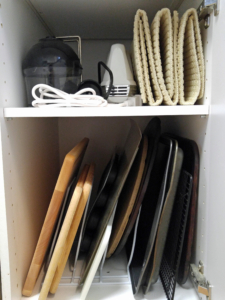
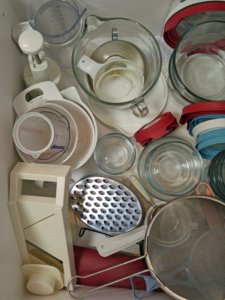
  1. After some research, we decided it was time to get serious about our water, and we invested in a Berkey water filter. Living on a farm we already had a need for bottled water and a basic gravity-fed water dispenser in our kitchen for drinking, but that got moved to my home office (we still bring bottled water in but it gets filtered) and the Berkey took center-stage.
  2. Food washing became a priority for us when my Functional Medicine Practitioner shared some information about parasites and how she was seeing more and more patients dealing with parasitic involvement as the root cause to their autoimmune diseases. It just makes sense, considering our food comes from all over the world — never mind the risk of germs from people touching it in the stores. So, now I have some economical, super absorbent dish drying mats that I use every week. No fresh produce is put away until it’s had a good bath in some vinegar and a few drops of lemon essential oils. Sometimes I resent the extra time it takes on grocery day, but in the long run it’s time saved because this means I’ve already washed and pre-trimmed or scrubbed my produce and meal prep becomes a breeze.

If someone was just starting to invest in some useful but more expensive kitchen tools, which one would you tell them to buy first?
Some would say an Instant Pot, but I’ve refrained from buying one of those, so, I’d have to say a good sized slow cooker is priority. Bone broth becomes such a big part of your life on this healing diet, I don’t see how you could be without one.

If I’m allowed to add others to this list, I’d suggest that a food processor and/or blender would be next in line. I’ve probably used my food processor more in the past year than I have in the prior 25! Our blender gets a good workout as well (my hubby loves his smoothies), and I use it a lot for things like sauces, blending plantains for waffles and making one of my favorite AIP desserts. I originally thought I’d have LOVED to have the most expensive one on the market (because the Vitamix is capable of high enough speeds to make and cook soup in the container), but we’re super happy with our considerably less expensive Ninja and find it’s more than up for the tasks at hand… so spend wisely!

Are there any tricks you have learned to make AIP work in your space?
Stay organized! I find cooking to be a much more enjoyable experience when my kitchen is neat and tidy, when my cupboards and drawers are organized and everything is where I expect it to be so I can grab it quickly.

It’s also helpful to keep the pantry, fridge and freezer sorted with things in the same place all the time — I find this super helpful when I need a hand in the kitchen (I can easily tell my hubby where he can quickly lay hands on an ingredient I’m after) or when I need to check what I’m getting low on for my next trip to the grocery store.

How do you deal with food for family members that are not AIP?
Convert them! Ha! Just kidding… sort of.

My number one piece of advice for anyone trying to please non-AIP eaters in their house is to keep it simple! Make an AIP main dish and round it out with non-AIP sides for your family. Typically it’s just my hubby and I that I’m cooking for, so it’s pretty easy.

In the beginning I used to make alternate side-dishes, like regular potatoes or rice for him, but since he suffers from his own autoimmune diseases he decided to join me (for the most part) on the AIP journey.

When it comes to cooking for friends and family, I just don’t tell them what they’re eating! AIP is just REAL FOOD after all. But, if we’re having folks in, I’ll often make additional sides or round out the meal with good quality gluten-free rolls or a baguette, or just regular bread and send any left-over dishes or bread that I can’t eat home with them. Sometimes I’ll have guests bring their favorite dessert, but most times folks are quite happy to try the AIP treats I serve, and they’re always surprised by how good they are.

My second piece of AIP advice is keep it on a “need-to-know” basis. I find for the most part, if you don’t tell people that the food in front of them is “AIP” or “Paleo” or “gluten-free” or otherwise… they’d likely never guess! Telling them it’s special just puts false ideas in their head that they might not like it.

Are there any tools or appliances that you’ve stopped using now that your diet has changed?
My bread maker has been pretty useless for a number of years now (since I’ve been gluten-free), but it’s been completely decommissioned now.

What are your favorite meals to batch cook?
Mickey will probably shoot me for saying this, but I’m not much of a batch-cooker. It should be right up my alley because I’m all about being organized, but in reality, when it comes to cooking I’m pretty lax.

I’d probably refer to my cooking style as “big-cooker” rather than “batch-cooker” Since there are only two of us, I find it works for me to simply cook a few bigger meals (or double a batch of something) throughout the week so that we have left-overs once or twice or throw a few meatballs in the freezer.

A couple of my faves would be Spatchcocked Chicken from Autoimmune Wellness (makes a great dinner and left overs for a second meal or chicken to be used in any number of other dishes) and Zuppa Toscana from Unbound Wellness (makes an enormous batch of soup for us that we’re happy to eat any time of day). Loaded Veggie Turkey Meatballs from Savory Lotus are one of my favorite meatballs — I usually make a double batch at dinner so we have them as a meal and then leftovers for snacks, breakfast or to freeze. Since I’m a lover all things treat, I will make a good size batch of Carob Avocado Mousse and store it in individual size serving dishes (it does well for over a week in the fridge and freezes and thaws well too).

What are your favorite AIP and Paleo cookbooks?
I’m a little embarrassed to say that I don’t have a favorite AIP cookbook. I have a whole bundle of AIP e-cookbooks but for the most part my recipes are found online.

A few of my favorite go-to sites for recipes are Autoimmune Wellness (obviously), Unbound Wellness, Phoenix Helix and A Squirrel in the Kitchen.

Do you have any tips for those starting an elimination diet and setting up their kitchens for the first time?

  1. Have an attitude of gratitude. I know that sounds cliché, but keeping a positive attitude about making the change to AIP is so important in the healing process (Check out the book “Healing Mindset” – another great resource). I often have folks tell me how they think the AIP is so restrictive, and they’re so sad about what they’re missing out on. I try to focus their attention on all the exciting new foods they’ll be trying and enjoying before long. A little perspective never hurts either, and I often can’t resist reminding folks that there are many people in the world that have to restrict their diet even further than the AIP — I personally was faced with the potential of having to go on a feeding tube if I couldn’t turn my disease around, and in the beginning EVERYTHING I ate had to be cooked. That makes folks realize that “I’m bored with salad” is quite an insignificant complaint.
  2. Keep it simple! Don’t think you have to break the bank going out to change every tool in your arsenal or replacing every item in your pantry. Balance and reasonableness need to prevail. Take it slow and steady or you’ll be ready to throw in the kitchen towel before you even get started.

Gail runs an AIP Recipes Facebook Group which you can join to get some AIP inspiration in the kitchen.

~~~

Looking for even more suggested kitchen tools, gadgets and small appliances? Having a hard time finding AIP Pantry items and snacks? Check out my AIP Amazon Shopping Resource and my Food Sourcing Page.

Is it possible to do the AIP on a budget?

I won’t lie, it’s a challenge, and you have to choose your battles when you’re doing the AIP and trying to stick to a budget.

My number one piece of advice for all things AIP … KEEP IT SIMPLE!

Don’t try to get fancy with complicated AIP Recipes, baking, treats and using specialty ingredients.

Since there are already great articles on this topic I won’t reinvent the wheel, but in a nutshell concentrate on simple meat and veggies with a focus on nutrient density. Prioritize (choose organic ingredients for the worst offenders – click here for the EWG dirty dozen and clean fifteen food list – but it’s not the end of the world if you can’t afford it), meal plan (check out the best app for those on a healing AIP diet – click here for my review of the RealPlans app – it’ll help you schedule leftovers and choose recipes using minimal ingredients), batch cook and/or cook extras for left overs and avoid food waste. If you have a small yard or a balcony you can even consider growing some of your own food (leafy greens like lettuce, kale, chard and herbs are easy to grow in the smallest of spaces).

Check out the following resources and learn that budgetary restrictions really don’t need to cramp your style on the AIP.

Looking for AIP ingredients?  Visit our Food Sourcing page for reliable AIP shops.

Looking to save money? Of course you are ~ Grab some coupons here!

Want to try meal-planning but not sure where to start? Try this 10-day meal plan challenge for FREE!

Like a good book? Check out “Dinner for a Dollar”an 11-step system that will help transform your food life. It’ll slash the amount of time, money and energy you spend preparing nutritious, delicious, whole food – even when you’re on an allergy friendly-diet. Buy it on Amazon in my AIP Storefronts – USA / Canada / UK

Great Resources from Autoimmune Wellness

Part I: Three Tips for Eating AIP on a Budget 
Part II: Five More Tips for Eating AIP on a Budget
Part III: Budgeting Tips for the AIP
Accessible AIP: When a Healing Diet Isn’t in Your Budget
AIP is a Plant-Based Protocol
Sourcing AIP Food 101 – Favorite tips for sourcing the highest quality ingredients for the best price
Food Storage Basics – Tips so you don’t waste precious AIP ingredients
PODCAST:  Food Budgeting & Prioritizing

Other Resources

5 Ways to Save Money on the AIP


This post contains affiliate links.  Click here to see what that means.

Nothing can de-rail a dietary plan faster than not having a plan at all!  If you’re like me, I tend to procrastinate about cooking and prepping meals, so I often get caught short of ingredients or inspiration.

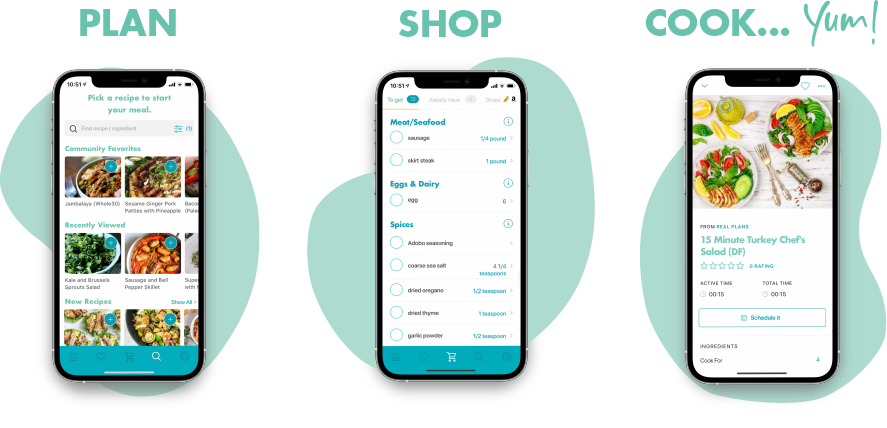
If you’re on the AIP and struggling because you pretty much have to plan and prepare every single meal you consume then the Real Plans app just might save your sanity!

RealPlans is the perfect partner on the AIP, a great source of recipes and a great way to store your personal favorites (from my searchable AIP Recipe Collection Facebook group, this blog or old family favorites you’ve modified)!  It’s actually the ONLY app that caters specifically to the AIP.

You’ll hear me say it over and over again:
“Failing to Plan is Planning to Fail!”

_______________________

RealPlans is NOT Your Average Meal Planner!

THE OVERVIEW:
  • It’s perfectly tailored to meet the needs of those on the AIP (gluten free, dairy free, nut free, grain free, egg free, soy free, refined sugar free and nightshade free) and even ACCOMMODATES ADDITIONAL FOOD SENSITIVITIES or family preferences – it shows you ONLY the recipes you should have! (It can be especially helpful if you’re avoiding FODMAPs, coconut or are having to consider macronutrients).
  • It’s completely ADAPTABLE AS YOU PROGRESS FROM ELIMINATION STAGE THROUGH REINTRODUCTIONS as you add individual ingredients back in.
  • It does all the math for you – tell it how many you’re cooking for and it adjusts!
  • LEFTOVER LOGIC & SCHEDULING LOGIC are new for 2020 – makes a provision for using leftovers for other meals (if you wish) and when/how you want to use them (e.g. – left over dinner for lunch), batch cooking days, big cooking (that’s what I like to call it) where you make additional portions for the freezer.
  • COOK ONCE eat often! Since the app asks you how many times you want to cook, it helps you formulate a batch-cooking plan to best utilize your time.
  • Gives you the option for SEASONAL RECIPES so you can eat what’s in season to you locally which SAVES YOU MONEY!
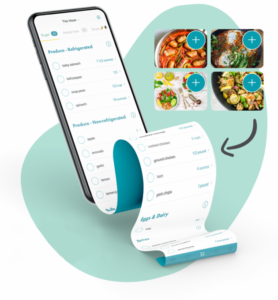
  • THE ONLY SHOPPING LIST YOU’LL NEED! Not only is it a smart list which shows you which recipe the ingredient is for when you hover over the item (helpful if you can’t find an item and need to considering omitting it), you can use it for everything since it allows you to add additional household items and provides the option of multiple lists for different stores.
  • BULK SHOPPING the shopping lists allow you to customize the date range you’re shopping for – perfect if you’re going on vacation, or planning for emergency situations.
  • Due to the COVID-10/Corona Virus pandemic many have LIMITED SUPPLIES – so, they added a feature allowing you to search for recipes based on the number of ingredients so you can locate simple recipes quickly AND a new feature called PANTRY which allows you to meal plan based on what you already have in your house – it’s genius! (See more features below that will help you during the pandemic or any emergency that leaves you short of supplies).
  • There are OVER 300 AIP RECIPES in the regular plan and add-on options that open up the recipe world even further – you’ll never run out of options!
  • You can use it to IMPORT RECIPES you find here in the group & have the app incorporate them in your meal plan.
  • You can UPLOAD FAMILY FAVORITES or recipes from cookbooks you have if you take the time.
  • It has a TIMELINE for REMINDERS WHEN TO THAW INGREDIENTS, optional emails and so much MORE!
  • It’s truly the ULTIMATE APP FOR THE AIP!!

For my full review of the app and for information on using the app in cases of emergency where food supplies may be limited (like hurricanes, power outages and even COVID-19), please see below.

Subscription Options:

GRAB a Subscription:
Purchasing for yourself – sign up here
Sign up for my newsletter and get 30% off an annual subscription or 10% off your first month – click here.

GIVE a Subscription:
Purchasing for someone you love – send a gift here

STILL not Sure?
RealPlans offers a 10-day money back guarantee – there’s really no risk!

Cant Afford a Subscription?
RealPlans offers a 4 week PDF meal plan for FREE. It’s old-school planning but it’ll help you get started on your healing journey through a series of emails – click here to sign up.

FEELING A LITTLE CHEEKY?
Share this post to social media with a little extra attention placed on that “GIVE” a subscription link as a subtle hint of what your loved ones could get you for Valentines Day … or your birthday … Mother’s Day …. Father’s Day …. or JUST BECAUSE you’re AWESOME Day!

Wishing you all much healing … and I hope you love this app as much as I do! 

_______________________

My Full Review of RealPlans

I first saw information about RealPlans MONTHS ago, and I ignored it, figured I didn’t need help with recipes and meal planning, I was doing just fine … “I’ve got this” … or so I thought!

That said … I was an idiot!  I wish I’d jumped on RealPlans as soon as I saw it, and I certainly wish it was around when I first started on AIP! OMG … It’s AWESOME!

Who’s the App For?

Whether you’re a novice AIPer or a seasoned veteran, this app is for you! First of all though, let me say, I’m not into apps and gadgets, so for me to get excited about this, that’s really saying something.

So, what is it? Just another fancy app that you’ll look at a few times and never go back to? HECK NO! You’ll use it every day!

RealPlans is a Meal Planning app that was created with specialty diets like the AIP in mind but it’s really suitable for everyone no matter what dietary plan you’re following. For AIP and anyone with food allergies or sensitivities this is the best thing since sliced AIP plantain bread!

What Is It?

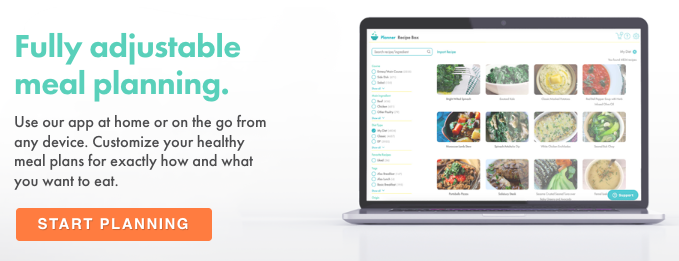
RealPlans is a specialized app that can be used on your computer, mobile device or both (I utilize it on both – some set up needs to be done on the computer so keep that in mind), it helps you plan your AIP meals (it’ll even tell you when to get those frozen goods out of the freezer so you’re ready to get cooking according to your plan), provides recipes, allows you to make more when you want left-overs and creates shopping lists to help you get the job done with ease!

Not interested because you already use a grocery list app? No worries – this app will allow you to add ANYTHING to your grocery list, and it’ll even set up more than one list, allowing you to decide which store to purchase items at.

How Does It Work?


This is a subscription app, and it’s available by the month, quarterly or annually (of course you save more by committing to quarterly or monthly subscriptions) AND there’s a money-back guarantee, so you can’t lose!

Once you sign up you can either go it alone or enlist the help of the experts (their customer service is excellent!) which makes the app perfect for everyone, regardless of your techno-savvy or lack there of.

  1. You tell the app who you are – how many people are in your family, where you shop (so it can set up your grocery lists), what unit of measurement you want your recipes to appear in (imperial or metric), which gadgets you use … like the instant pot or slow cooker.
  2. You tell it what you like to eat, so in our case you’d select our specialty diet – AIP – it then automatically eliminates the top 8 food allergen groups from the options. IMPORTANT: The app allows for ALL stages of the AIP diet, from Elimination through Reintroduction, and allows you to easily add individual foods back into your diet or whole food groups. The app is also customizable for folks that are on Paleo, Whole30, GAPS or Keto, or maybe just vegetarian, pescatarian, gluten free or dairy free and even traditional diets … so keep it in mind … it makes a great gift for anyone that needs help planning meals!  UPDATE:  They’ve even added macro tracking for those that need or want that … these guys think of everything and welcome customer feedback to help make their product better!
  3. You then customize your food selections by telling it what additional foods you need to avoid … you can exclude additional groups of food or individual food items, so for me I excluded all variations of pineapple since I’m allergic.
  4. Tell the app which meals you REALISTICALLY plan to prepare (you make your selections with the use of easy slider buttons) … we’re not superheros folks, so count on those cherished left overs (UPDATE FOR 2020 – they’ve added a feature for scheduling left overs and which meals you want to make extra portions of for this reason), schedule days off if you’re visiting friends or family or eating out, and tell the app how much work you want to do … it’ll figure out the rest. You can even ask it to only show you recipes that take under 30 minutes to make!
  5. Once the app populates your calendar with recipes (all of which are recipes YOU CAN EAT … it’ll never show you something that you shouldn’t have – talk about a fail safe … especially for newbies on the AIP!) you can go about customizing it to suit your family’s needs. Do your kiddos insist on Taco Tuesday? It can do that! Just drag and drop recipes, add items here and there, it’s amazing!
  6. Want to use recipes you’ve collected from our Facebook Group, or an old family favorite … yup … it can do that too! It’ll even allow you to customize the existing recipes from the app to your personal taste – you can edit the recipes to your preference! The sky is quite literally the limit with this amazing app, and the recipe box is amazing!
  7. Want even MORE recipes that you don’t need to go searching for or import? You can upgrade your app and purchase a recipe package from some of the big names in the AIP community, like The Paleo Mom, Meatified, Nom Nom Paleo and the Autoimmune Wellness girls. SCORE!  Life just got easier again!
  8. Once you’re done planning your recipes for the week, the app populates a shopping list and you’re ready to hit the ground running! You can even edit your shopping list to add things not in the meal plan (like tooth paste and toilet paper). As I mentioned earlier, you can add more than one store that you shop at, and indicate where you want to purchase various items, which makes life a breeze once you get to the shops.

Initially there’s a bit of set up with the app (you can even tell it what type of pantry items to leave off of your grocery list, like spices and condiments), but once you’ve got it customized to your liking, you’re golden! Did I mention you can even tell it you want to have the same recipes in weekly rotation? A great feature since I know a lot of us like consistency in our routines.

Having a dinner party – no worries, it allows for that and you can adjust the serving sizes of any recipe at any time! It’s like magic!

Once you sign up, you’ll get several emails from RealPlans in the days ahead … it’s NOT SPAM … the emails are super useful and will help you get the most out of the app with tips and instructional videos.

So – that’s my review of RealPlans! In case you hadn’t guessed, I highly recommend this for anyone struggling to keep up with AIP meal planning, for those who don’t have time to keep looking for recipes … and especially for newbies … what an AMAZING tool to help you keep to your AIP goals! If you use the app, it won’t let you eat something you shouldn’t (though you do still need to watch the labels on ingredients).

There’s seriously so much to this app I can’t cover every last feature … you really need to jump in and get your feet wet … it’s extremely useful, and trust me, I’m not one to suggest spending money on things frivolously!

I find there’s always a holiday or special day right around the corner, so why not show yourself a little self-care and give yourself this amazing gift!

In Case of Emergency:

Important TIPS:  In light of the COVID-19 outbreak (or any state of emergency that leaves you short on supplies – think tropical storms and hurricanes folks) and concerns over grocery shopping, limited supplies and meal prep, consider some general tips and ways you can use RealPlans to help you SHOP SMART!

1. Freezer meals are the perfect plan to make fresh ingredients last longer.
2. Meal planning helps you to shop smart and stick to your healthy eating.
3. Use the RealPlans for inspiration or clear the plan and be inspired by the recipe box.
4. Use the filters in the recipe box to find great meals that you can freeze, or batch cook for leftovers.
5. Modify recipes to cater to what is left in the stores (or your house).
6. RealPlans has adapted their app to allow you to search recipes by the number of ingredients – a great feature when supplies are running low.
7. The new pantry feature will help you find recipes based on what you have on hand!
8. Add additional items to the shopping list to make it fit for your real life (paper goods, trash bags, etc).
9. Use the shopping list to shop for more than one week if needed to prepare for any necessary isolation.

Looking for a little encouragement dealing with COVID-19 and the AIP – Click here to read my encouragement post.
Want more tips for emergency planning for a specialty diet? Click here. 

This post contains affiliate links.  Click here to see what that means.

Where Do Supplements Fit Into A Healing Diet?

With nutrient density and a balanced diet as the priority of the AIP, you might be confused about whether you should also be taking supplements or not.

I’ve had many people tell me they MUST supplement because they’re cutting eggs and dairy and what ever else out of their diet while on the AIP … but in reality this doesn’t have to be the case!

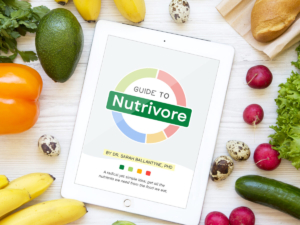
Nutrivore for AIPIf you’re concerned about a certain deficiency, I encourage you to do a quick Google search (search: “What foods are rich in X…”) to find out what foods are rich in that vitamin/nutrient, or better yet, check out my post – Eat the Rainbow and consider delving into “Guide to Nutrivore” or “Nutrivore: The Radical New Science for Getting the Nutrients You Need from the Food You Eat” by Dr. Sarah Ballantyne, one of the pioneers of the Autoimmune Protocol. I think you’ll be shocked by how much you can get just from eating the RIGHT fruits, vegetables and proteins!
That said, I’m not saying that supplements are a no-no on the AIP, that’s not the case at all.  Many people may be in nutritional crisis due to their medical condition and they may need to supplement in addition to using the AIP to heal (this was and is the case for me).  Most IMPORTANTLY, always follow the guidelines of your doctor, functional medicine practitioner, AIP coach or nutritional consultant – click here for where to find help.

Don’t miss these articles by Autoimmune Wellness :

5 Reasons You Should Get Your Nutrients from Real Food Before Supplements – learn about affordability, the power of real food over supplements, when supplements make sense and so much more!

Supplements & The AIP – learn how to evaluate supplements, whether you need them and which supplements might be of benefit to you

Hidden Gluten, Grains and Nightshades in Meds and Supplements – this is an important topic to consider if you’re taking supplements or medications on the AIP

AIP Trouble Shooting

Before we head into more on supplementation, I want to offer this one thought … if you feel your AIP elimination diet isn’t working for you, and reintroductions just aren’t going well, resist the urge to eliminate more and more foods. Our goal is to be adding foods back into our diet, not removing more and potentially creating disordered eating. 

If you’ve given the AIP elimination diet a serious go an are struggling, please check out my resource on “Digging Deeper & Trouble Shooting the AIP.” 

What Should I Take?

The “I” in that question is THE most important word … supplements are completely unique to each individual. There is NO one-size fits all approach to supplementation, just like there’s no one-size fits all AIP.

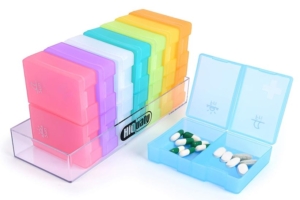
My Favorite Supplement Organizer! Large enough for fish oils and more.

There is NO one regime that works for every person with Hashimoto’s or Graves, no guaranteed standard set of supplements someone should take if they suffer from Chrons, Fibromyalgia, MS, RA, etc., and so on. Resist the urge to be a copycat – unfortunately, it’s not as easy as copying from one person’s regime to your own. This can be especially true with things like probiotics (folks with SIBO and digestive disease have special needs – sometimes you don’t even know what your underlying issues are and that makes it trickier again!), and then there’s B vitamins which can be challenging for folks with methylation / detoxification issues, and don’t get me started about anyone dealing with mold exposure issues – things I thought were safe for me are not … and the list goes on and on and on!

Honestly – save yourself some time and stop wasting money on supplements that might not be right for you! If you’re aimlessly taking supplements, or jumping on the latest fad supplement for belly fat, bloating or autoimmune disease, you might simply be creating really expensive urine! That’s right, you heard me … if the supplements aren’t right for you, or your body isn’t absorbing nutrients efficiently, you could just be flushing them and your hard earned cash down the toilet … literally!

That said, supplementation is really something you should work through with an expert, such as a Functional Medicine Practitioner. Seriously consider this – it could save you money AND months or years on your journey to health.

Where Should I Buy My Supplements?

I just mentioned wasting money, none of us want to do that, but more importantly, you want to be sure you’re getting quality supplements. There’s a lot of hubbub lately about fraudulent supplements being sold online from sources like Amazon, so please, buyer beware! If the price is cheap and it seems to good to be true, it likely is.

Beyond that, supplements are scary confusing! There are so many things to watch for when it comes to nutritional ingredients and quality, never mind all the tricky inactive ingredients that may be hiding in your supplements (did you catch that article link above?)! So if you’re feeling confused, whenever possible, enlist a professional who is knowledgeable about the AIP and your diagnosis to assist you with determining the right supplements and best brands for your personal situation.

aiprecipecollection.com - SAVE 10% off EVERY brand, EVERY day! Stackable on Volume Discounts!While I’m not about to recommend any particular product for anyone’s personal situation (DISCLAIMER: I’m not a doctor), I will point you in the right direction to a trusted company that has been recommended by many autoimmune experts. I have personally used Perfect Supplements desiccated liver and organ capsules, collagen and more. I trust their quality offerings so much that I decided to become an affiliate. You can find them here, and you can save money when you use this link and CODE: “AIP10”  
Save 20% when you purchase 3 or more Perfect Brand products (+ 10% more with my coupon)
Save 10% off EVERY brand, EVERY order! 

(NOTE: Not all products offered by this partner are necessarily AIP – you will still need to do your own research and consult a professional for advice.) 

LOOKING for other options?  Since I know many people are looking for quality supplements at affordable prices, I’ll share one of my favorite shops – iHerb, and you can save 10% as a new customer or 5% as a returning customer with my referral code “HAN855” (NOTE: I still do a lot of research before purchases – you’ll need to evaluate brands and ingredients on everything you choose). One of the best things about shopping for my supplements online is that it allows me to dig in, compare prices, brands and ingredients before buying. I simply can’t do that buying in a physical store – there’s too much pressure!