Kicking the Coffee Habit
This post contains affiliate links. Click here to see what that means.
Coffee … the beloved morning elixir … nectar of the Gods, for some! So how will you ever kick the coffee habit when you begin the AIP?
Before you dive in, it helps to know this—going off coffee doesn’t have to be a dramatic all-or-nothing moment.
Even though coffee is removed during the core elimination phase of the AIP, many people find it easier to cut it out gradually rather than quitting overnight, especially if they’ve been relying on it daily. Think of it less like a cliff jump and more like a slow step-down. There’s no gold star for powering through withdrawal headaches if you don’t have to.
The goal here is simply to remove coffee from the diet in a way that feels sustainable for your body—so you’re not trading one stressor for another in week one of AIP.
Now, with that said, there’s also a lot of confusion around coffee and the AIP, so let’s quickly clear a few things up:
- Coffee is not eliminated because of the caffeine
- Coffee is a seed and is eliminated in the early stages of the protocol along with other seeds
- There are other options that many enjoy – so don’t despair
Now that you understand the “why,” the next step is figuring out the “how”—because removing coffee doesn’t need to feel overwhelming or like punishment.
A Gentle Way to Step Away From Coffee
Before we even get into what to drink instead, it helps to zoom out for a second—because for most people, kicking coffee isn’t just about the caffeine. It’s the habit, the morning ritual, and the very real withdrawal that can come with changing something you’ve been doing every single day.
So instead of thinking “stop coffee,” it can be a lot more manageable to think in three small shifts:
1. Taper, don’t yank it away
If you’re a daily coffee drinker, going straight from full strength to nothing can feel rough. Many people do better slowly reducing intake over time—whether that’s smaller cups, fewer servings, tapering it with some decaf during the day, or gradually diluting it with something else. The goal is to reduce the shock to your system so you’re not starting AIP in withdrawal mode.
2. Keep the ritual, change the cup
This one matters more than people expect. The warmth in your hands, the morning pause, the “this is my moment” feeling—those don’t have to disappear. Swapping coffee for something else warm and intentional helps your brain keep the routine while your body adjusts. It sounds simple, but it often makes the transition feel far less abrupt.
3. Reduce the withdrawal load where you can
Sleep, hydration, and steady meals can all make a difference in how intense coffee withdrawal feels. A lot of the “coffee crash” people experience isn’t just caffeine—it’s caffeine layered on top of fatigue, blood sugar swings, and stress. Supporting your baseline can take the edge off as you transition.
The aim here isn’t perfection or pushing through discomfort for the sake of it—it’s making the change in a way your body can sustain.
From here, it becomes much easier to figure out what actually goes in the mug—because you’re not trying to “replace coffee,” you’re just supporting the transition.
 The BEST Coffee Substitute We’ve Ever Met!
With those three shifts in place—tapering, keeping the ritual, and easing the withdrawal load—you’re already most of the way there. At that point, it’s not really about “quitting coffee” anymore… it’s just about what you choose to put in your cup next.
And honestly, this is where things have come a long way in recent years.
I’ll be honest, I’ve never been a coffee drinker – it’s too hard on my tummy – so this was one hurdle I never had to overcome on my AIP journey! My hubby however is a bit of a coffee snob, and any time I’ve tried to get him off the stuff it’s met with a flat “NO-WAY, NOT HAPPENING”! You see, he’s tried lots of the old coffee alternatives that never came close to tasting like coffee, so he’s pretty closed minded about it all.
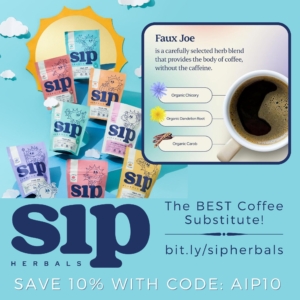
That said, I’m happy to introduce you to a product that actually fits into that “transition” space really well—Sip Herbals Coffee Substitute. It’s honestly the closest thing to coffee we’ve ever tasted, and members of my private AIP Recipe Collection FB Group agree. More importantly, it gives people something warm, familiar, and comforting to reach for while their body is adjusting away from coffee.
Honestly, this gut-friendly cuppa is so good that you’ll want to keep drinking it long past your elimination stage journey.
All of their regular flavors (signature roast, cinnamon roll, royal mocha, salted maple blondie, French vanilla and dirty chai) – plus their limited edition seasonal offerings (peppermint mocha and pumpkin spice) are AIP core elimination stage compliant, organic, non-GMO and caffeine free. I was so excited about this product that as soon as I tried it, I knew I had to partner with them.
Visit my partner’s shop for complete details and enjoy a 10% DISCOUNT off EVERY order you place with my exclusive discount code “AIP10” – click here to shop.
Wait, what .. it’s caffeine free? I hear you saying you need your caffeine boost! If that’s the case, check out the amazing option below.
Meet Matcha!
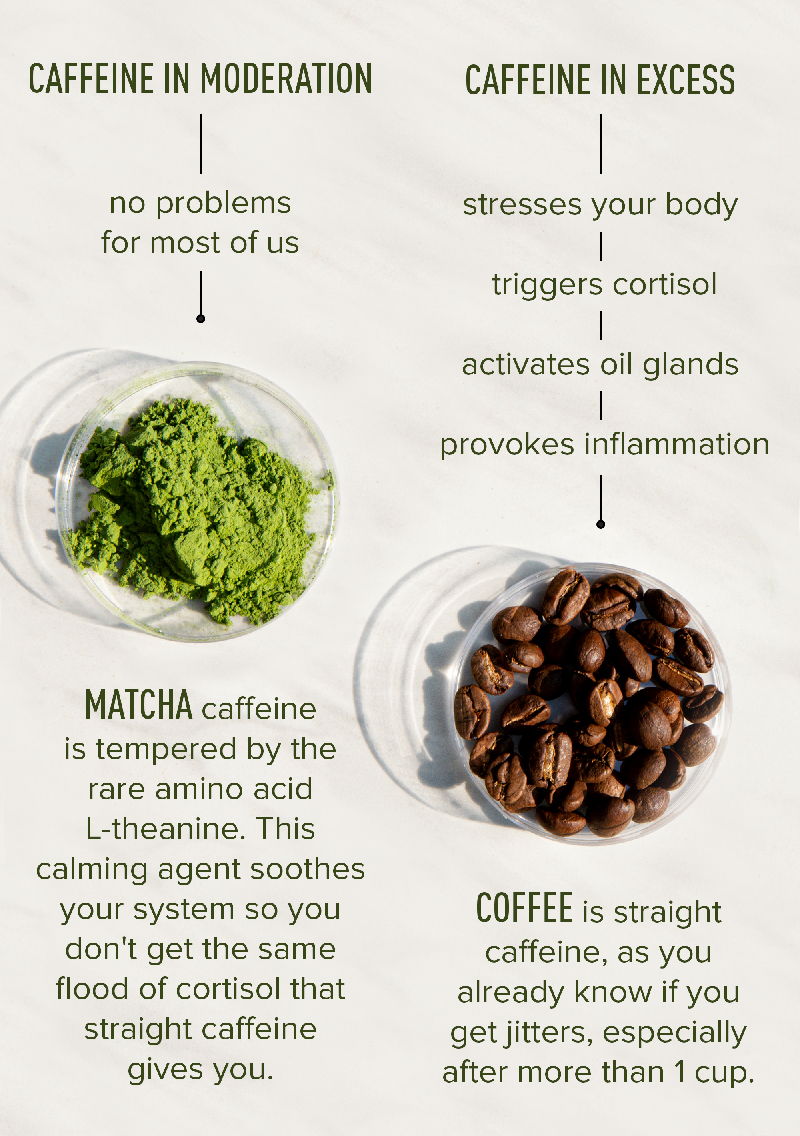
If Sip Herbals is the “keep the ritual, no stress” stage of the transition, matcha is often where people naturally land when they still want a little lift in their day.
Need another reason beyond your AIP healing journey to explore matcha? It’s worth looking at how tea compares to coffee when it comes to caffeine and how your body actually experiences that energy.
- Tea caffeine tends to be released more gradually than coffee, which means you’re less likely to get that sharp spike-and-crash feeling. Instead of a quick jolt followed by a drop, it’s more of a steady, even curve.
- A lot of people also notice that tea feels gentler on the nervous system. One reason for that may be naturally occurring compounds like L-theanine, which can help smooth out some of the jittery edges that coffee can bring for sensitive systems.
- There’s also emerging research suggesting that tea polyphenols may play a supportive role in gut health—which is something worth considering on the AIP.
At this stage, it’s more about noticing what actually supports your energy in a sustainable way.

A quick note on quality (because it really does matter)
Not all matcha and tea is created equal.
I encourage you to read more about Tea on the AIP (click here), Matcha and Green Tea (click here), and Why I Choose Pique Tea (click here).
Pique offers a range of tea crystals that are third-party tested and designed for convenience without compromising quality. I love using their matcha for a simple latte made with additive-free coconut milk and a touch of honey—it’s become one of those steady, easy parts of my day.
Pique is my favourite high-quality option–the tea crystals are extremely convenient because they’re hot and cold water soluble, and they honestly just taste better!
Learn more about Pique Tea on their website – click here – and you’ll find additional testimonials from health experts there as well.
Will I Ever Enjoy Coffee Again?
Let me start by saying that coffee is a stage one reintroduction when you’re using the core AIP elimination diet, so it can be one of the first things you try to add back in. Can I get a “woot woot!?”
Annnnd, if you’re starting off with the modified version of the AIP elimination diet (be sure to read more about the ins and outs of this – click here to make sure the modified version is right for you), you can keep on enjoying coffee right off the bat! With some caveats of course.
Before you get too excited, there are definitely some cons when it comes to coffee and those faced with autoimmune disease and gut issues.
Did you know?
- Coffee and the immune system are complicated. Caffeine itself generally has anti-inflammatory effects, but coffee contains many other compounds that can influence immune function, and research suggests that people can respond very differently. For some people coffee may be neutral or even beneficial, while for others it may aggravate symptoms or contribute to inflammation.
- Sadly, coffee is a dirty crop, meaning that many beans are cross-contaminated with gluten and can contain mold and mycotoxins. Avoid pre-ground and instant coffee – these are far more likely to be susceptible to cross-contamination in food manufacturing. Look for brands that are USDA organic, free of pesticides and chemicals, shade farmed at high altitude and 3rd party tested for mold and mycotoxins. If you want to take it a step further, for the sake of the planet, watch for those that are Rainforest Alliance Certified, bird friendly, and fair trade. Check out some of my recommendations in my AIP Storefronts on Amazon – click here. If you’re thinking decaf might be a better way to go, you might want to dive deeper into the process of how coffee is decaffeinated – it can involve a host of chemicals (search out those using the Swiss water method), and caffeine is actually protective when it comes to inhibiting mold growth.
- Mushroom coffees may not be the answer. While not made from beans/sees, most are made from apoptogenic mushrooms which can rev up the immune system – not something we want to do with autoimmune disease, so proceed with caution if you’re looking into this option.
- Coffee consumption has been associated with several autoimmune diseases, including rheumatoid arthritis and type 1 diabetes. If you have Hashimoto’s, coffee can also interfere with the absorption of thyroid medication. And if you have GERD (gastro-esophageal reflux disease) or struggle with acid reflux, you may find that coffee aggravates your symptoms and is best avoided.
- Finally, caffeine can also be an issue for some people. It can irritate a sensitive digestive system, contribute to anxiety or heart palpitations, and temporarily increase cortisol. For someone already dealing with significant stress or poor sleep, that extra stimulation may not be particularly helpful.
A More Sustainable Way to Think About It
If you do choose to bring coffee back into your life, it often works best when it’s reintroduced slowly and intentionally—paying attention not just to whether you can have it, but how it actually makes you feel after you’ve been off it for a while.
Another side point – make sure that your prep methods aren’t working against you! Pods and many traditional drip style coffee makers have your filtered water sitting at room temperature in toxic plastics, or forced blazing hot through toxic plastic pods. After much research, my husband (I’m not a coffee drinker) prefers a glass or stainless steel French Press or a stainless steel percolator – not just to avoid the nasty plastics, but for best flavor (he’s a bit of a coffee snob).
Resources
If you want to go a little deeper, here are a few helpful reads that break things down in more detail:
Kicking the Coffee Habit – A little more basic, this article covers some commonly asked questions.
Six Alternatives to Coffee on the AIP – Some great information and advice for what else you can drink in place of coffee.
Take Me To The Recipes!
If you’re still figuring out your rhythm, it can help to have a few go-to options ready so you’re not standing in your kitchen wondering what to do with your hands at 7am.
Here are a couple of AIP-friendly ideas that tend to get people through that transition phase. These aren’t meant to perfectly replace coffee—they’re more about giving you something warm, grounding, and familiar while your system adjusts.
RECIPE: AIP “Bulletproof” Style Dandelion/Chicory Coffee
RECIPE: Dandelion Coffee
Now I’m sure you’re wondering where the heck you’re going to find chicory and dandelion … am I right? Don’t worry – we’ve got you covered in my AIP Amazon Storefronts – USA / Canada / UK
Looking for more recipes? Be sure to check our Facebook Group for LOTS more options. Try searching “Latte” and “Coffee” or “Matcha” – you’ll be amazed how many inventive replacements there are.