
Tag Archive for: FAQ

This post contains affiliate links.  Click here to see what that means.

Gelatin vs. Collagen – what’s the difference!?

If you’re new to AIP, collagen and gelatin can feel like one of those “wait…aren’t those the same thing?” rabbit holes … and wait … what about hydrolyzed collagen, collagen hydrolysate and collagen peptides! Oh my!

Great Lakes Gelatin Co. is a perfect example. They make both gelatin and collagen, and the packaging can trip people up. I’ve even seen recipe creators accidentally link the wrong one—so frustrating when you’re just trying to follow along. (I hate it when that happens!)

So indulge me and let’s geek out a little so we’re all armed and know exactly which product to use when.

What’s The Difference Between Collagen & Gelatin?

Gelatin = gels
Collagen = dissolves

The more scientific explanation is this:

Collagen vs Gelatin:

  • Gelatin = partially broken down collagen (heat-processed collagen, gels when cooled)
  • Hydrolyzed collagen / collagen hydrolysate / collagen peptides = fully broken down collagen (same thing, different naming conventions, does NOT gel when cooled)

Now, back to the easy stuff ….

The major difference is how you consume them. In a nutshell, gelatin gels – collagen does not – so you choose your product based on how you’re trying to use it / what you’re trying to accomplish.

Gelatin is usually only soluble in hot liquids and is typically used for things that jiggle – think AIP Jello, marshmallows, gummies and gelatin egg substitutes (read more about egg replacements here). Collagen on the other hand will dissolve in hot or cold mixtures, making it ideal for use in beverages, smoothies, soup, sauces and even baked goods (it’ll also help you up your protein content, keep reading). 

Both are almost completely odorless and flavorless, so you can add them easily to beverages without effecting the taste. This is important when it comes to a question that I get asked ALL-THE-TIME – “What Protein Powder Can I Use on the AIP?” – You can read my post on that as well – click here.

When it comes to the health benefits, gelatin and collagen are very similar in amino acid profile, especially rich in glycine and proline, though collagen peptides are further broken down for easier absorption.

On a healing diet, collagen and gelatin are important for a variety of reasons:

  • May help support digestion and gut barrier function
  • Supports joint, bone, and connective tissue health
  • May support skin elasticity and reduce the appearance of dryness or roughness
  • Often noted for supporting healthier-looking hair and nails

Want the complete 411 on Collagen and Your Health? Check out this amazing article from my partners at Perfect Supplements – click here.

Are There Any Substitutes?

I get SO many questions about making substitutions in AIP cooking and baking that I’ve written a full post on it – you can check it out by clicking here.

There really is no cut and dried answer as you learn from my post, BUT I’ll cover a couple of basics here as they pertain specifically to gelatin and collagen.

Typically when I get questions about gelatin or collagen substitutes its because someone is sensitive to beef or pork, or they’re trying to do the AIP as a vegetarian or vegan (please read more about the AIP and vegetarianism/veganism here).

If this is the case for you, there are a couple of limited options – but options none-the-less!  You can find collagen derived from sea vegetables and you can use Agar Agar powder or flakes (also derived form sea vegetables) in place of gelatin! (Read more about how to use Agar Agar in my post about egg replacements.)

Check out my AIP Amazon storefronts to find these products: USA, Canada or the UK 

What About Bone Broth?

What about bone broth, what’s the difference between bone broth, collagen and gelatin?

Bone broth is considered a whole food that contains gelatin (which comes from the breakdown of collagen) along with a variety of other naturally occurring healing compounds including: bone marrow, hyaluronic acid, chondroitin sulfate, calcium, phosphorus, magnesium, and potassium.

Bone broth is made from, you guessed it, bones! Traditional bone broth often includes bones, connective tissue, and sometimes skin or joints depending on the recipe (some recipes call for chicken feet, joint tissue, and cartilage). Collagen and gelatin, on the other hand, are typically made from animal hides, which gives them a slightly different amino acid profile compared to bone broth.

In general, collagen and gelatin are considered supplements and would be used in addition to bone broth on your healing diet.

  • Bone broth → whole food, variable protein
  • Gelatin → gels, cooking applications
  • Collagen peptides → mixes easily, daily supplement

What Brand Do You Recommend?
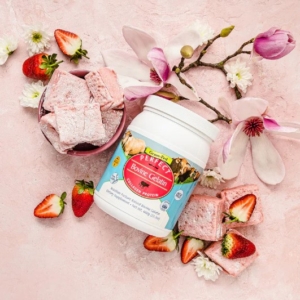
There are several great brands that I’ve personally tried and would recommend. If you can’t find the following, what you want to look for is a quality product that indicates it comes from grass-fed, pasture raised cows or pigs (if we were talking about gelatin, that would rule out the well-known store brand, Knox – it just doesn’t make the cut). For those who can’t tolerate beef or pork you might want to consider a quality marine collagen that’s wild-caught and non-GMO – this is actually a great option for everyone – it’s very nutrient dense (it doesn’t however come in a gelatin form – see the information about agar above).
 
AIP Gelatin / AIP Marshmallows / Perfect Supplements BIG Discount - up to 35% off! aiprecipecollection.com Perfect Supplements carries a fantastic line up of products, including Grass-Fed and Pasture Raised Bovine Collagen and Gelatin, powdered bone broth (LOVE IT!) liver powder and capsules (these helped me through my worst nutritional crisis), coconut oil and so much more. They also carry a lot of quality supplement brands I personally trust.
Where to buy:  You can shop direct here at Perfect Supplements (CODE: AIP10)
Shopping Tip: My coupon is STACKABLE on volume disocunts!
 
Autoimmune Health & Nutrition carries plain grass-fed collagen, plain protein powder with added veg and some fun flavors for adding to smoothies and more!
Where to buy: You can find their products on Amazon – click here and be sure to shop for the option without stevia
 
Vital Proteins has a HUGE line up of products – NOT all are AIP compliant, but it’s a brand you can trust – just watch the labels and stick to basic products (no added vitamins as these are usually synthetic and often not compliant). 
Where to buy:  You can find them on Amazon (be sure to watch ingredient lists – you’re looking for plain product with no flavors or additives)
 
Great Lakes Gelatin Co. offers a simple line of quality products – Grass-Fed and Pasture Raised Collagen and Gelatin. They used to offer Porcine (pork) Collagen as well but that seems to have disappeared recently. A WARNING about shopping this brand – the name of the company has the word “gelatin” in it, so you’ll need to watch you choose the right product – the green package is collagen and the orange package is gelatin.
Where to buy:  This brand is pretty readily available in health food stores, quality grocers, in my AIP Storefront on Amazon: USA, Canada or the UK

Take Me To The Recipes!

Now that you know the difference, it gets a whole lot easier to choose what actually works in your kitchen (and avoid the label rabbit holes altogether).

Ready to start incorporating collagen and gelatin into your daily AIP healing journey? Use the search feature in our Facebook Group for recipes like: smoothies, gummies, Jello, marshmallows and more. Simply try searching the group for collagen or gelatin.
Substitutions in AIP Cooking & Baking Can Be Tricky …
Caution is Required!

Can I substitute this for that, or that for this? This is probably one of the most frequently asked questions I get from folks that either can’t find ingredients or have allergies or sensitivities.

In traditional cooking and baking substitutions can be pretty straightforward and usually a minor tweak here and there to a recipe won’t cause a problem … HOWEVER, this is the AIP and many of the ingredients (especially in baking) simply do not react the same way.

Not only are some of the ingredients you’ll run into unfamiliar and difficult to access, they can also be a bit more expensive.  That said, I don’t want you risking your precious supplies when there are better options.

So, what should you do?

If you’re looking to substitute an ingredient in an AIP recipe (e.g. tapioca – arrowroot, plantains – green bananas, cassava flour – tigernut flour, palm shortening, coconut oil, coconut butter, coconut milk, coconut cream… etc… etc…….) I recommend trying to do a little digging in the recipe itself.  To me the authority on each recipe is the recipe creator.  Folks creating AIP recipes do a LOT of trial and error before they settle on their final masterpiece and present it to the world. That said, who better to tell us if a substitution can be made. They want you to recreate their dish with success and experience the same taste and texture that they did – they’re proud of their work and don’t want folks leaving bad reviews about it based on some random substitution gone wrong.

Suggestions:

  1. Try looking at the entire recipe post. Many food bloggers prelude the recipe with a lengthy article about how they came up with the recipe and why they choose the ingredients they did. This will OFTEN give you a clue as to whether substitutions are a good idea.
  2. Read comments that other people have left on the recipe at the bottom of the blog post. OFTEN you will find the answers you seek are there. Sometimes there are a LOT of comments on a recipe, so you can try using the computer search function inside the recipe (ctrl-F brings up the search box) this will help expedite your search.  Simply try entering the ingredient you wish to use .. it might take you directly to the answer you need.
  3. Quantity is another factor to consider.  If the substitution you’re considering involves the main ingredient or a relatively main ingredient of substantial quantity, I typically recommend searching for an alternate instead of considering substitutions. Find a similar recipe that contains ingredients you can use or access.  It may take a little digging, but from experience I’ve found that you’re likely NOT the only one that’s required a substitution and someone’s usually filled the void with a new recipe creation that’s been tried and tested.  Try using the search feature in our Facebook Group where there are literally thousands of recipes posted.
  4. If it’s a matter of not being able to find certain ingredients in your area I would recommend you check out our Food Sourcing page for links to products and online stores that carry AIP items. Barring that you can try Amazon, they are a great resource for unusual items.
  5. It seems that many starting out are sensitive to coconut products, and I get asked a lot about a blanket substitution for coconut milk and coconut aminos since these are quite commonly used in AIP recipes. First let me start by saying that in AIP baking there is no standard substitute for coconut milk – you will need to assess the suitability on a recipe by recipe basis. If you’re simply looking for an alternate AIP milk, you can try making your own tigernut milk, avocado milk or banana milk (recipes for all of these can be found here on my website: Milk Options for the AIP) – but remember – you have to assess the recipe – the properties of each of these AIP milks are different and they will not react or produce the same results as coconut milk. AIP cooking is a little more forgiving, and you can find a couple of recipes to make your own coconut aminos replacement in the Facebook Group. Also, once you’re in the group, you’ll see that I tag a lot of recipes #coconutfree – this will make your life easier and help you find recipes that you don’t need to worry about substitutions.
  6. Once you’ve exhausted all the options above, you could try posting a question on the original recipe – that way the creator of the recipe can advise you directly, or post a question on the recipe you’re having trouble with in our Facebook group.

A Final Note:

Substitutions in AIP BAKING are far more risky than AIP COOKING, so be aware that you may be risking your ingredients to recipe failure if you do decide to make substitutions (especially substitutions of vital binding and starch ingredients). Looking to learn more about things like cassava flour, tapioca and arrowroot starch? Some folks think you can interchange these items, but that’s not always the case – read my dedicated post about that here – Arrowroot vs. Tapioca vs. Cassava.

I personally chatted with Mickey Trescott of Autoimmune Wellness about this subject during a Live Q&A that we did in our Facebook Group – you can watch the Q&A session here if you wish, but the gist of it is this – Recipe creators do their very best to create AIP recipes that are going to taste like the “real deal” – not some strange AIP/Gluten Free knock off – TRUST their EXPERTISE!!

More from Mickey Trescott on Substitutions:

This is taken from Mickey’s Instagram feed – follow Mickey here – she’s awesome!

AIP BAKING SUBSTITUTIONS // Have you left a comment on my baking recipes saying “I can’t tolerate X do you have any recommendations?” or “Will this recipe work with X instead of Z?” You may have been disappointed in my answer (usually something along the lines of a simple “no, sorry”). Nothing makes a recipe developer more frustrated to hear feedback that a recipe didn’t work only to hear that substitutions were made or they didn’t follow the directions.

Today, I’m going to explain…

1. When I develop an AIP treat recipe my #1 goal is to come up with something that is palatable enough to serve to your non-AIP friends and family. I test my recipes carefully to make sure they TASTE GOOD. I choose ingredients based on how they perform – I’m looking for the right texture and ease of repeatable success in YOUR kitchen.
2. Specialty ingredients are EXPENSIVE and FUSSY. I don’t want you to waste time and money on bad results. There are no perfect 1 to 1 swaps of these baking ingredients – each one is unique, and I do not spend time discovering what type of disaster you are going to end up with if you use coconut instead of arrowroot (I can tell you right now though, it isn’t going to work).
3. I understand that certain AIP baking ingredients (hello cassava and coconut) are not tolerable to a lot of folks in our community. My recommendation is NOT to try and adapt AIP recipes to fit your additional restrictions – look for recipes that are specifically written without those things. You’ll find cassava-free, coconut-free, and added sweetener-free dessert recipes in all of my books and in the @autoimmunepaleo blog archives. Go find them!
While I don’t advise eating them on a regular basis, a yummy AIP treat recipe can be a fun indulgence or a way to celebrate with friends or family. Do yourself a favor and set yourself up for success by selecting a recipe that calls for ingredients you tolerate and using tools you have on hand.


As you probably know by now, the Autoimmune Protocol is about far more than food. While diet plays a powerful part, long-term healing on the AIP requires a broader, more holistic approach.

To be truly support your journey to autoimmune wellness, it’s important to look beyond what’s on your plate and consider lifestyle factors that influence immune function, gut health, and hormone balance. Things like sleep, stress, movement, connection, time in nature, and making room for rest, relaxation and enjoyment play a much bigger role than most people expect — and they can either support your healing… or quietly hold it back.

If you’re newer to this concept, you may find it helpful to read The New Autoimmune Protocol, which expands on the lifestyle foundations that go hand-in-hand with the dietary side of AIP and explains why they matter so much.

Below are a few additional resources that build on these ideas and can help you put the “beyond food” pieces of the AIP into practice in a way that feels realistic and sustainable.

Sleep

This is HUGE! Are you getting enough? What’s right for one might not be enough for another.

Did you know that not getting enough sleep causes inflammation and increased susceptibility to infection – even in healthy people! Studies show that one night of poor sleep causes higher insulin resistance than six months of bad diet! In fact, scientific studies show that sleep may be even more important for our health than diet! Now, if that’s not enough to make you take a serious look at your sleep routine, I don’t know what is! Check out my expanded post on Sleep Struggles – Click Here.

It’s recommended that we get to bed by 10 pm for optimal rest and recovery, and that we get 7 to 10 hours of sleep per night (for autoimmune sufferers it might be 9-10 hours or even 12 hours every night to heal).

Stress Management

Did you know that chronic stress can affect your immune system, sleep, digestion and many other aspects of your health? Without getting into a bunch of science about cortisol, adrenaline, hormones and more (I’ll leave that to the experts), simply know that prolonged stress puts your body under pressure and can make it harder for your body to maintain its normal balance.

Finding effective ways to reduce and manage stress is imperative for our healing journeys. It’s been one of my biggest challenges, and I still need regular reminders! It’s essential for maintaining healthy immune function, good sleep and overall well-being. Each of us will need to find effective ways to deal with our individual stressors. For some, it may be as simple as learning to slow down, scheduling deep breathing exercises and meditation, or making time for healthy self-care activities like yoga or gentle exercise. For others, more may be involved, and you may need to seek the support and guidance of a professional to help deal with past or present trauma, personality traits or difficult situations.

And remember, stress isn’t always psychological. Lack of sleep, physical exertion, environmental factors and the everyday demands of life can all contribute to your overall stress load. Sometimes managing stress means looking at the bigger picture and finding ways to balance the demands on your body with adequate time for recovery.

For some it may be as simple as learning to slow down, scheduling deep breathing exercises and meditation, healthy self-care activities like yoga or gentle autoimmune safe exercise (see below). For others, more may be involved and you may need to seek the support an guidance of a professional to help deal with past or present traumas, personality traits or difficult situations. 

Activity

We all know that movement is good for our health, but what should you do when you’re faced with chronic illness and you often don’t have the energy to do much more than get out of bed in the morning?

Not surprising then that the most commonly avoided part of the autoimmune protocol is exercise.

There are lots of ways to incorporate light activity into your day. For some it might be just a reminder by way of a timer on your phone to get up and stretch or move around a little. Short walks, yoga, rebounding and stretching might be as much as you can achieve, while others may feel they’re capable of more but are unsure of how to approach an exercise program safely so they don’t face setbacks.

Nature

Getting outside and spending time in nature can be another simple way to support your overall well-being. And you don’t need to live beside a forest or spend hours hiking to enjoy it. A walk through a local park, sitting in your backyard, gardening or simply spending a little time outdoors can all give you an opportunity to step away from the demands of everyday life.

I’ve also written about forest bathing, a practice that involves slowing down and immersing yourself in nature using your senses rather than treating your time outdoors as another workout. Read more about Forest Bathing here.

Play & Relaxation

When you’re focused on getting your health back on track, it’s easy for wellness to become another job. But making time for things you enjoy is important too.

Laugh. Spend time with people you love. Read a book, listen to music, work on a hobby, get creative, watch something that makes you smile or simply give yourself permission to do something just because you enjoy it.

These things may not look like traditional “health habits,” but taking regular breaks from the stresses of everyday life and making room for fun and relaxation are part of taking care of yourself too. Your life can’t be all elimination diets, supplements and symptom tracking!

Looking for resources beyond what you’re finding in the FAQ section?

I’ve created this post so you don’t miss out on the valuable information on our Resources Page – click here to be redirected.

Medical Disclaimer: This page is for educational purposes only and is not a substitute for professional medical advice. Always consult your healthcare provider before making changes to your diet, lifestyle, or supplements. Read my full Disclosure & Medical Disclaimer.

“Strict” AIP is NOT a Life-Sentence

The Autoimmune Protocol (AIP) is meant to be approached in stages — transition, elimination, maintenance, and reintroduction.

Many people get stuck: either they stay too long in strict elimination because they’re feeling great and are intimidated by reactions, or they get impatient and add foods back too quickly, or without thoughtful tracking, making all their hard work futile.

By now, you should have a good understanding of the AIP and its stages. If not, go back to Start Here #1 to get fully grounded.

To re-cap a little, however:

Transition Stage: A Gentle, Sustainable Start

Here’s the exciting update: Mickey Trescott’s New Autoimmune Protocol now includes a transition stage.

Before, you had a choice — cold turkey or slow and steady. Now, slow and steady is strongly promoted because it’s more sustainable, reduces overwhelm, and sets you up for success in both elimination and reintroduction. Think of it as easing into the AIP rather than jumping off a cliff. Your body and your sanity will thank you.

Reintroductions Are Mandatory (Not Optional!)

Let’s be clear: reintroductions are not a “maybe” — they’re essential.

This is where the real food trials happen:

  • You’ve removed the most commonly reactive foods.
  • Now you’ll add them back slowly, one at a time, starting with the most nutrient-dense foods first — or a favorite food first, if that brings you more joy, because the AIP isn’t about restriction.
  • Skipping reintroductions keeps your AIP efforts incomplete — you may never know which foods are safe or triggers for YOUR body.
  • Prolonged elimination deprives your body of exceptionally healthy, nutrient-dense foods.

This stage is where the magic really starts: you’ll regain variety, flexibility, and confidence in your food choices, while gathering personal data on what works for YOU.

Timing Is Personal

Here’s the hard truth: there’s no one-size-fits-all answer.

  • Some people need 30 days, others 60–90 days, or even longer. Your body needs time to “rest and digest”, allowing inflammation to calm so you can accurately gauge reactions.
  • If after 60–90 days you still see little improvement, it’s definitely time to dig deeper, troubleshoot your approach, and work with a medical professional to uncover any underlying issues that may not yet have been addressed.

Perspective: Healing takes time — your body didn’t get here overnight. But your body is remarkable and capable of repairing itself when given the right tools.

Check All Pillars

If you feel you should be ready but aren’t improving, step back and assess other factors: stress, sleep, movement, and environmental exposures. For more, see Troubleshooting the AIP.

Important: If you’ve followed the full protocol (including lifestyle changes) for 90+ days and still see no improvement, please, seek guidance from a professional to explore the possibility of underlying causes that may be holding you back.
Find a practitioner near you – click here.

Be Patient

Some may want to rush into reintroductions, but remember … slow and steady wins the AIP Race!

Resist the urge to start too soon, and resist the urge to “wing it” when it comes to reintroductions. You’ve put in 30–90 days (or maybe even more) on the elimination stage — don’t waste that effort by throwing in the towel or deciding for yourself how best to reintroduce foods.

The elimination stage was meant to give your body the space it needs to rest and reset. If you’ve been patient and are feeling quite well, reintroductions will likely be an easier process. Starting with a “clean slate” allows your body to clearly signal when a food isn’t agreeing with you — helping you recognize the cues your body is sending.

That said, be sure to follow a systematic reintroduction plan, including keeping a food and symptom journal (more about that in the resources below).

So, how do you get started? Here are the guides and resources I recommend for best results.

Keep Moving Forward!

What ever you do, keep moving forward – there are no rewards for longest amount of time spent in the AIP elimination stage!

Some people in the AIP Recipe Collection Facebook Group proudly announce they’ve been strict elimination for 759 days … and I just can’t. No. No. No.

I mean, I get it — there are a lot of folks out there who feel too darn good after having eliminated the top inflammatory offenders from their lives, and they don’t want to go back to feeling horrible again. But this is exactly where food fear creeps in, and it’s why you sometimes hear people saying, “the AIP is a dangerous, restrictive diet that just keeps people sick.”

Let’s be clear: elimination diets and the reintroduction process are still considered the gold standard for assessing food allergies and sensitivities — even more reliable than largely inaccurate food sensitivity or allergy testing (you can read more about that here if you’re curious).

Reintroductions are just practical! They help improve your quality of life and open up your ability to socialize more freely.

If you remember, back at the beginning when we started talking about the AIP, what we’d eat, and what we’d avoid, we specifically said there were some very nutritious foods that would be eliminated — TEMPORARILY!

Limiting or restricting food groups long-term can cause dysbiosis in the gut and nutritional deficiencies, so we need to get those foods back into our diets as soon as possible if they’re not problematic for your individual case.

Summary of the AIP Elimination Phase:

  • It isn’t meant to be forever
  • Needs to be approached with intention, because long-term restriction can create food fear, nutritional gaps, and gut imbalance
  • Helps heal your body, but the real fun, and food freedom, starts with reintroductions!

All of this said, I hope you see how important it is that you MUST put on your big people pants and take on reintroductions. You’ve already proven that you can do hard things by making it this far — reintroductions are just the next step … and you’ve got this!

Don’t be a case that perpetuates the myths and misconceptions about this protocol – keep moving!

Reintroduction Guides & Resources:

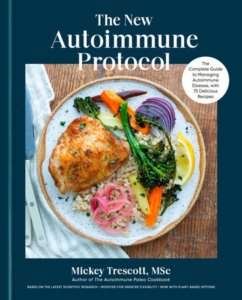
The New Autoimmune Protocol (2026) by Mickey Trescott - includes all phases from transition through elimination stages (core or modified) to reintroductions, food lists, meal plans and recipes!Reintroductions can be tricky, but like I said, you can do hard things. It’s always tempting to try to compare your reactions with someone else’s, but the bottom line is that this too is VERY individual. You will need to keep good track as you go along so you can recognize signs and symptoms of reactions and celebrate all the wins along the way.

My go-to suggestion for all things AIP from transition through elimination, reintroductions and maintenance is Mickey Trescott’s Autoimmune Protocol books. The New Autoimmune Protocol (2026) covers the latest in research and is the first I’d suggest. Browse the options in my AIP Amazon Storefronts here: USA / Canada /UK

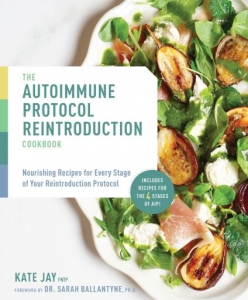
The Autoimmune Protocol Reintroduction Cookbook aiprecipecollection.comAs of June 2021, the first cookbook dedicated to AIP reintroductions was released, and it’s spectacular! It’s great for all stages of the AIP and a great motivator. It discusses the process of reintros and provides delicious recipes to keep you progressing – check out my review here – The Autoimmune Protocol Reintroduction Cookbook – Kate Jay of Healing Family Eats (NOTE: One caveat to this recommendation is that the AIP was updated in 2024, so this book does NOT include information about the “modified” elimination state – it is based on “core” AIP elimination as your assumed starting point.)

Articles from trusted AIP experts:

Definitive Guide To Reintroductions – Autoimmune Wellness
Personalized AIP – Autoimmune Wellness
Top 5 Mistakes People Make Reintroducing Foods – Eileen Baird
Why Aren’t My AIP Reintroductions Working?

Medical Disclaimer: This page is for educational purposes only and is not a substitute for professional medical advice. Always consult your healthcare provider before making changes to your diet, lifestyle, or supplements. Read my full Disclosure & Medical Disclaimer.

Understanding the Autoimmune Protocol (AIP) | Beginner’s Guide

If you’re new to AIP, this page is here to give you a clear, grounded overview of what the Autoimmune Protocol actually is, why it works for so many people, and how to think about it as you begin.

I’m not going to dive deeply into biochemistry or recreate the excellent research-informed material that already exists elsewhere. My goal is to help you understand the big picture — with links and resources if you want to explore further.

What is the Autoimmune Protocol (AIP)?

AIP stands for Autoimmune Protocol. You may also hear it called the Autoimmune Paleo approach, though that name can be misleading.

While it grew out of Paleo principles, AIP is about far more than diet alone. Food is one pillar — an important one — but lifestyle factors are equally important to the protocol, and we’ll explore those in more detail as we go.

At its core, the AIP builds on a modified version of the Paleo diet, with a stronger emphasis on nutrient density, immune support and gut health. The aim is to give your body the raw materials it needs for immune regulation, hormone balance, tissue repair, and overall resilience — while reducing exposure to common inflammatory triggers from both diet and lifestyle.

How AIP Approaches Food

AIP simplifies food choices into two broad categories:

  • Foods that support health — packed with nutrients that help your immune system, gut, and overall resilience
  • Foods that may trigger inflammation — containing compounds that can contribute to immune activation or digestive stress

When done properly, AIP is balanced, nourishing, and satisfying. It prioritizes nutrient-dense foods like vegetables, fruit, seafood, organ meats, mushrooms, fresh herbs, quality proteins, and healthy fats.

This isn’t about eating less or chasing perfection — it’s about eating intentionally and mindfully.

The Phases of AIP

The Autoimmune Protocol unfolds in several phases. Some say it’s three, but I prefer to look at it this way:

  1. Transition – the new approach includes a gradual, slow-and-steady start that makes the AIP more sustainable from the very beginning.
  2. Elimination – a starting template designed to calm inflammation and establish a healing baseline.
  3. Reintroduction – a structured process to test foods and learn your individual responses.
  4. Maintenance – a long-term, personalized way of eating that supports ongoing health.

This structure emphasizes flexibility and personalization — the AIP is not one-size-fits-all, and the goal is sustainable progress, not perfection.

Lifestyle Matters Too

Food is central, but lifestyle factors are just as critical. Sleep, stress management, movement, time outdoors, and emotional well-being all affect immune function, gut health, and hormone balance. Think of AIP as a toolbox of strategies to help you make consistent, sustainable choices for your unique health needs.

In short: AIP is about learning what helps your body thrive — not following rigid rules.

It’s practical, flexible, and designed to empower you to feel better from the inside out.

Where to Start

It’s important not to get stuck in a cycle of endless research — but at the same time, having a solid understanding of the fundamentals will help you start on the right foot and avoid unnecessary frustration.

Start With a Trusted Guidebook 

The New Autoimmune Protocol (2026) by Mickey Trescott - includes all phases from transition through elimination stages (core or modified) to reintroductions, food lists, meal plans and recipes!My #1 Recommendation: The New Autoimmune Protocol (Releasing May 26, 2026)

This is the definitive guidebook that the AIP Recipe Collection uses as its primary reference for the group and website. It’s the resource that provides real, practical answers to any question about the Autoimmune Protocol — the book we turn to for clarity, guidance, and reliable information.

The New Autoimmune Protocol is the first official update to the science-backed framework, integrating emerging research and years of clinical feedback to make the protocol more flexible and sustainable.

It includes:

  • Detailed meal plans
  • Over 70 Core and Modified AIP recipes
  • Step-by-step guidance through Transition, Elimination, Reintroduction, and Maintenance phases

Pre-order now to be among the first to access this updated, authoritative guide: The New Autoimmune Protocol – learn more here

Other Recommended Guidebooks 

If you’re here before The New Autoimmune Protocol is released, or if you’d like to explore other aspects of AIP — like reintroductions, ethnic cuisine, comfort foods, meal prep, or mindset support — I’ve curated a selection of the best books and resources to help you along your journey.

All of these trusted AIP guides and more are available in my AIP Amazon Storefront in the Curated Book Section : USA / Canada /UK

Think Beyond Food

Nutrition is only one piece of the healing puzzle. AIP isn’t about one “perfect” pillar — it’s about making consistent, sustainable changes across diet and lifestyle.

To help you focus on where to begin, check out my post: Where Should You Start Your AIP Healing Journey? — a practical guide to approaching AIP in a way that’s supportive, flexible, and grounded in real life.

Remember: You don’t need to do everything at once. Progress matters more than perfection.

When is the Best Time to Start AIP?

Many people aim to start AIP around New Year’s resolutions, but timing can make a difference. Choosing a period when your life is more manageable can help set you up for success and make the protocol feel less overwhelming.

Learn more here: When Should You Start Your AIP Healing Journey?

Is the AIP for Everyone?

AIP isn’t just for people with autoimmune disease. Inflammation plays a role in many chronic conditions, and food is one of the most accessible ways to influence it. The Autoimmune Protocol focuses on nourishing the body, reducing inflammatory load, and supporting immune regulation — benefits that extend beyond autoimmune diagnoses.

That said, AIP is not a replacement for medical care. It works best alongside conventional medicine, medications, supplements, and functional or integrative approaches. Always check with your healthcare provider before making major diet or lifestyle changes.

At its core, AIP is a flexible framework or toolbox — a collection of best practices around food and lifestyle — that can be personalized to your circumstances and goals, especially when your health challenges mean your body has less tolerance for suboptimal choices.

Additional Reading & Resources

If you’re unable to purchase a guidebook right now — or want to share clear explanations with friends and family — these are excellent starting points:

Need a Helping Hand?

If you anticipate challenges transitioning to AIP or sticking with it, check out my Coaching Page for additional support and resources.

Ready to Continue?

To keep this page focused on the fundamentals, deeper topics and resources are saved for the next step in the series:

👉 Beginner Resources – Start Here (Part 2)

Medical Disclaimer: This page is for educational purposes only and is not a substitute for professional medical advice. Always consult your healthcare provider before making changes to your diet, lifestyle, or supplements. Read my full Disclosure & Medical Disclaimer.

Helpful Resources for AIP Beginners

Now that you’re more comfortable with the basics of AIP (if you missed it, check out Start Here Part 1), let’s explore additional resources that can make your Autoimmune Protocol journey easier, more enjoyable, and sustainable.

1. Food Lists

Food lists are essential for getting started. Concentrate your efforts here next. See my detailed Food Lists page to guide your shopping and meal prep effectively.

2. Mental Preparation for AIP Beginners

Preparing mentally is just as important as preparing your kitchen. Take a moment to:

  • Acknowledge your feelings — grieving over illness is part of the healing journey. Read my post about this so you don’t feel so alone.

  • Establish your baseline — take note of how you feel now: your energy, symptoms, sleep quality, mood, and any other relevant factors. This helps you track progress over time. Without a baseline, it’s easy to feel like you’re not making progress, even when you are. Observing small improvements can be incredibly motivating and empowering.

  • Use positive affirmations — it really helps your brain and body during challenging times. My favorite, as corny as it sounds, is:

    “My body is capable of doing wonderful things and of healing; I just need to give it the tools to do the job.”

  • Give yourself permission not to be perfect — it’s next to impossible to be 100% AIP all the time.

  • Be thankful — even if it’s just for the fact that your healing journey will be easier than those who came before you when these resources weren’t available. Then, put on your big girl/boy pants and move forward!

Read Angie Alt’s post for more guidance: 6 Ways to Mentally Prep for the AIP.

3. Keep It Simple

Simplicity is key to long-term success on the AIP. I talk about it in my own motivational page, where I share some fundamentals to maintaining your sanity on the AIP.

Some of the key areas I suggest focusing on there are:

  • Nutrient-dense foods
  • A few essential kitchen tools
  • Basic meal approaches rather than complicated recipes
  • Using convenience products wisely
  • Avoiding too many changes at once

For some additional practical guidance, I recommend the tips found at Autoimmune Wellness: 5 Ways to Keep It Simple on the AIP 

4. Kitchen Tools

Many people ask about AIP-friendly kitchen tools. Here are my top resources:

I’m honored to have been included in this tour back in July 2018 — you can check out my kitchen here!

5. The Best AIP Meal Planning App

Stay motivated and on track with “Real Plans,” the meal planning app designed specifically for AIP. Learn more in my review or sign up directly. Subscribers to my AIP Recipe Collection Newsletter receive 30% off! Sign up for that here.

6. Motivation to Get Started

The AIP Manifesto is a quick, empowering read summarizing 20 core principles to help you feel confident and motivated on your AIP journey.

7. Motivation to Keep Going

Sign up for my monthly newsletter to receive seasonal recipe round-ups, inspiration, and exclusive AIP lifestyle content — perfect for staying on track and feeling supported. It’s FREE!

8. Digging Deeper

If you’re hungry for more information, want to refine your approach, looking to dive deeper into AIP strategies, or in need of back-up assistance to troubleshoot what you’re experiencing , check out Start Here Part 3: Digging Deeper & Troubleshooting for advanced tips, do’s and don’ts, and practical guidance.

Medical Disclaimer: This page is for educational purposes only and is not a substitute for professional medical advice. Always consult your healthcare provider before making changes to your diet, lifestyle, or supplements. Read my full Disclosure & Medical Disclaimer.

Start Here Part 3: Digging Deeper & Troubleshooting

Unfortunately, there may come a time when you feel it’s one step forward and two steps back. When that happens, it can help to dig a little deeper into the do’s and don’ts and start some troubleshooting.

I’m going to get on my soapbox here for a moment here,
so brace yourselves!

1. Tracking

Proper tracking is essential to know what’s working and what isn’t. By tracking, I mean everything you consume, your daily activities (work, sleep, exercise, relaxation, self-care), stress levels, reactions to foods and supplements, medications, and more. Reactions can be subtle — things like itching, skin problems, dizziness, congestion, or pain.

I call this type of tracking a food/mood/poop journal. Yes, it’s a real thing! Even if you’re not ready to start a full journal yet, here’s why it’s so important:

  • Reactions can be delayed: Effects of foods, supplements, or medications may show up up to 72 hours later. Without tracking, you won’t remember the details.
  • Weight can be informative: While AIP isn’t about weight loss, weighing yourself daily can help detect subtle inflammation and pinpoint triggers.
  • No fancy tools needed: I used a simple Excel spreadsheet stored in the cloud — easy to update and searchable, so I could quickly review patterns.

2. Give it an Honest Shot

It’s only by truly giving the Autoimmune Protocol your full attention that you’ll know what’s really working.

  • The Elimination Stage is a minimum of 30 days, but some don’t see noticeable improvement unit the 60–90 day point.
  • Slow and steady wins the AIP race. Don’t expect miracles! You didn’t get sick overnight, so you won’t get better overnight.
  • If you’ve given it an honest shot and aren’t seeing improvement, it may be time to troubleshoot underlying issues with professional help. It’s important that you do this, rather than starting to eliminate more foods from your diet.

Check out my post on Finding Your Root Cause for guidance on identifying what might be holding back your progress.

3. Did You Really Follow the Protocol?

Before troubleshooting, ask yourself: did you truly follow the protocol correctly?

  • If you haven’t yet explored Mickey Trescott’s resources, now is the time. Her books are our gold standard starting point, and cover everything from transitions through elimination and reintroduction stages, and troubleshooting. 
  • Grab a copy from my AIP Amazon Storefronts — USA / Canada /UK

If you’re ready to troubleshoot, keep reading.

4. Progress & Patience

Sometimes people experience what’s called a “healing crisis” — where symptoms temporarily flare when the begin the elimination phase.

If you’re feeling worse than before you began, you may be scared or want to give up. I suggest considering these resources:

5. Troubleshooting

The best article I’ve found on troubleshooting the AIP is by Mickey Trescott of Autoimmune Wellness: Troubleshooting the Autoimmune Protocol — A Guide. She explains:

  • When to troubleshoot (and when not to)
  • First steps to investigate
  • Three key areas to explore
  • Her personal experience troubleshooting AIP

6. Professional Help

If you’ve gone through the above steps and still can’t pinpoint the problem, I highly recommend consulting a Functional Medicine Practitioner or Certified AIP Health Coach.

Without addressing underlying issues, the AIP can feel like “putting a band-aid on a battleship.”

Find professional support here, including a list of Paleo-Friendly Autoimmune Specialist MDs.

—-

NOTE: As with any significant dietary change, you should only undertake the AIP under the guidance of a trained nutritional coach or physician.

This post contains affiliate links.  Click here to see what that means.

Your Secret Weapon for Gut Health – Pique Tea Crystals

If you haven’t heard of Pique yet, or you’re a little confused about why I’d consider promoting tea while for those on the AIP, allow me to explain.

  • First of all, black and green tea (read my post about Matcha vs. green tea here on the blog) are allowed in moderation during the initial elimination stage of the Autoimmune Protocol
  • Secondly, finding quality beverage options on the AIP can be a challenge. Sure we may find some good herbal, green or black tea options on the market, but often times they’re not as pure as we might think. Some are laden with pesticides, toxins and artificial flavors, additives and even gluten!
  • Pique Tea crystals are free of sugar, grains, dairy, gluten, artificial additives and fillers.
  • Pique Tea is TOP QUALITY and TRIPLE TOXIN SCREENED for pesticides, heavy metals and mold (all things that those with autoimmune disorders have to watch out for)!  Pique Tea contains TWELVE TIMES the antioxidants of regular tea in tea bags … that means WAY more healing power!

Gut Health:

When it comes to autoimmune disease, you’ve likely heard it over and over again that immunity starts in the gut, and without a healthy gut, it’s pretty much impossible to start healing.

Your gut contains over 100 trillion bacteria that play a vital role in your overall health. It controls 80% of your immune system, mood, metabolism and more.

Since we’re trying to heal our gut, it won’t surprise you to hear me say that Quality Matters – not just of the tea itself, but in the delivery method – so you’re not going to want to drink just any old tea!

Did you know that a recent study found that those silky, fancier-looking tea bags/sachets release approximately 11.6 billion microplastics in a single cup of tea!  Crazy, right!? How about paper tea bags? Well, they can be a problem too because of the chemicals used to keep them from breaking apart (aka glue). 

Pique checks all the boxes again – no bags, just powders!

Recommendations:

Not only have I done my own research about Pique Tea and tried it myself (BTW, it’s delicious and so convenient – soluble in hot or cold water, no bags, no loose tea and tea ball messes – just convenient single serving completely dissolvable tea crystals in packages you can take with you anywhere!), I HIGHLY trust the opinion and advice of Dr. Sarah Ballantyne, The Paleo Mom who’s the expert behind the science of the AIP. She has this to say about Pique Tea:

“There’s emerging evidence that tea polyphenols can improve your gut microbiome by supporting the growth of probiotic strains like Lactobacillus and suppressing the growth of pathogenic bacteria like C. difficile, even reversing obesity-related changes in the microbiome caused by high-fat diets!

But, not all teas are created equal – Pique Tea delivers up to 12X the antioxidants of regular teas and are also triple toxin screened! That’s why I am absolutely in love with the superior quality and taste of Pique Tea!”

You Get What You Pay For:

As you might expect, top quality tea with this kind of healing power doesn’t come at bargain brand prices, but you can save with bundles, collections and purchases of 5 boxes or more.

Important Note:  Not all Pique tea varieties are suitable for the AIP Elimination Stage (and Pique is continually adding new products), so keep an eye on this – stick to herbal offerings: things like Mint, Ginger, Hibiscus, Oolong and Rooibos  and watch out for adaptogens like Chaga, Reishi and fermented teas to name a few (these might not be right for you during eliminations, but they’re great options to add as you reintroduce more foods and beverages back into your life).

Learn more about our affiliates at Pique Tea on their website – click here – and read additional testimonials from the health experts. 

Your Health Is Worth It!