
Eat The AIP Rainbow
This post contains affiliate links. Click here to see what that means.
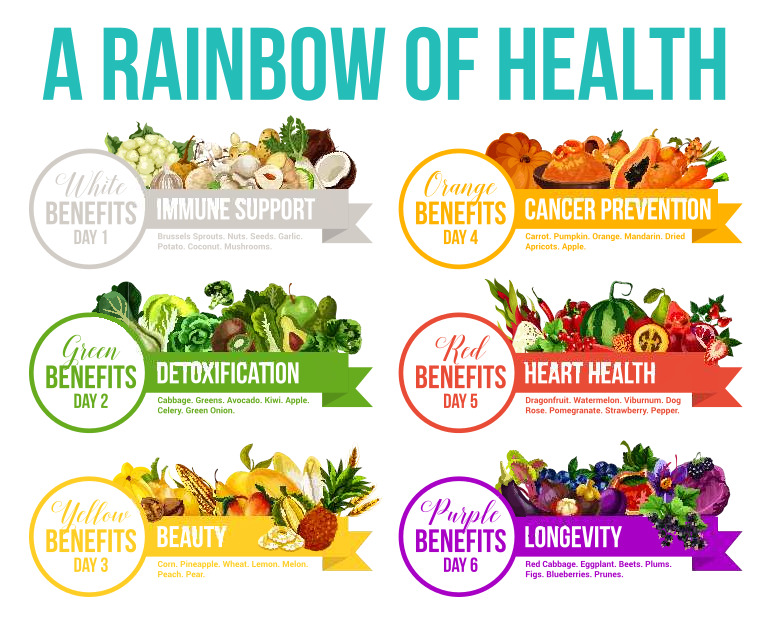
If you’re on the AIP (Autoimmune Protocol) elimination diet, you may or may not realize that our goal is nutrient density – and that means LOTS and LOTS of colorful fruits and veggies.
Since the AIP is actually a modification of the Paleo Diet, some people get confused and think of it as the carnivore diet – but it’s definitely NOT that.
So, does that mean the it’s a vegetarian, vegan, pegan or pescetarian diet? Nope! While it’s definitely veggie-centric with 8 servings or more of vegetables and fruit per day, it’s actually not recommended to do the AIP as a vegetarian or vegan (you can read more about that here).
We need to find balance on the AIP and focus on healing nutrients. You want to become a “Nutrivore!”
While I’m usually pretty good at eating a variety of fruit and veg, a recent chat with my Functional Medicine Practitioner helped to bring it back to top of mind and it inspired me to share this with you too since I’m often asked about serving sizes, variety and how to get more fruit and veg into our diets.
How Much is a Serving?
I get this question a LOT when ever I reference the “8+ servings” goal.
Hitting 8 or more servings of vegetables and fruit each day might sound like a lot, but it’s totally doable—and it’s one of the easiest ways to make sure your body gets the vitamins, minerals, and fiber it needs. Think of it this way: if you aim for 2–3 servings of veggies at every meal (yes, even breakfast!), you’ll reach that goal without stress.
The standard vegetable and fruit serving size established by the World Health Organization in 2005, and used in more scientific studies evaluating benefits of high vegetable and fruit consumption, is defined as 80 grams raw, or just shy of 3 ounces.
This roughly translates to:
- 1 cup raw vegetables
- ½ cup cooked vegetables
- 2 cups raw leafy greens
- 1 medium fruit (about the size of baseball)
- ½ cup chopped fruit (or berries)
- ½ cup cooked fruit
If you’re concerned with getting enough veggies in, you’re going to want to stay tuned and check out the resources at the end of this post that will help you stay on track, increase awareness of your vegetable intake and whether or not it meets your healing goals. It’s the easiest and most intuitive way to ensure we’re getting enough veggies, fruit and high-quality meat and seafood into our diets weekly – no perfectionist tendencies, no guilt!
Why It Matters: Benefits of High-Veggie Intake
Eating plenty of vegetables and fruit is one of the most powerful ways to support your health and protect against chronic disease. The more colorful plants you eat, the more benefits your body gets, from your heart to your bones, your immune system to your waistline. Here’s a snapshot of what a veggie-packed diet can do:
- Support healthy blood sugar: Fiber slows glucose absorption and leafy greens provide nutrients that help regulate blood sugar.
- Protect your heart: Potassium, magnesium, and fiber help keep blood pressure and cholesterol in check.
- Boost immune and gut health: Nutrients and fiber nourish your gut microbiome and help prevent leaky gut, a contributor to autoimmune issues.
- Strengthen bones: Calcium, magnesium, vitamin K, and antioxidants support bone density—sometimes even better than dairy!
- Fight inflammation & oxidative stress: Antioxidants in colorful fruits and vegetables reduce cellular damage and inflammation.
- Reduce risk of chronic disease: High veggie intake is linked to lower risk of diabetes, cardiovascular disease, certain cancers, and obesity.
Key Nutrients in Veggies
Vegetables and fruits are little nutrient powerhouses. Each color offers different vitamins, minerals, and plant compounds that support healing, energy, and overall wellness. Here are some of the most important nutrients to know:
- Carotenoids (Vitamin A, beta-carotene, lycopene): Antioxidants that support vision and immunity; found in carrots, squash, sweet potatoes, tomatoes, and dark greens.
- Polyphenols & Flavonoids: Anti-inflammatory compounds that protect the heart, reduce cancer risk, and support gut health; found in berries, citrus, parsley, and cocoa.
- Sulfur compounds (Isothiocyanates, Diallyl Sulfide): Detoxifying and anticancer benefits; found in cruciferous veggies (broccoli, cabbage, kale) and alliums (garlic, onions).
- B Vitamins & Vitamin C: Aid metabolism, energy production, collagen formation, and immune function; abundant in leafy greens, peppers, citrus, and root vegetables.
- Minerals (Calcium, Magnesium, Potassium, Zinc, Copper, Manganese): Support bones, nerves, muscle function, and overall cellular health; found throughout leafy greens, cruciferous vegetables, and a variety of fruits.
- Fiber: Feeds gut bacteria, improves digestion, supports hormones, and lowers inflammation; soluble fiber in apples, berries, citrus, legumes; insoluble fiber in leafy greens, cruciferous vegetables, and carrots.
Eat the AIP Rainbow
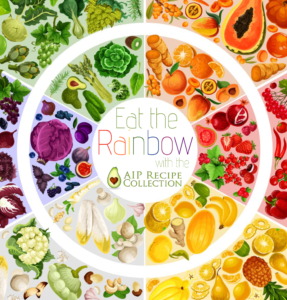 While there are diets out there focused on helping you eat the rainbow every day, they’re not really suitable for the AIP, since we avoid some brightly colored options during the elimination stage (think nightshades like peppers, eggplant, beans, tomatoes and more that are out in the beginning. Looking for AIP food lists? – click here.)
So, what’s an AIP-er to do?
First of all, mindset is HUGE! Always look at the CANs instead of the CAN’Ts! There’s an abundance of nutrient dense options we can choose from. Just look at this image – almost all of the fruits and veggies are suitable for every stage of the AIP.
It’s really a matter of re-training ourselves. We need to look past our old go-to choices – why not venture out of our comfort-zone and wander into areas of the produce section you might have skipped before? Make it a goal to take home at least ONE compliant fruit or veggie that you’ve never tried before (or that you rarely eat). Browse the AIP Recipe Collection Group on Facebook (where our big database of AIP recipes lives) for ways to prepare your new-found food – you’ll usually find at least a couple of options. Not finding many recipes there that suit your fancy? Try an Internet search for “AIP [insert vegetable or fruit name here] Recipes” and share one with the group as a new post so that we can all be inspired and try something new.
How-To Eat the AIP Rainbow!
Stuck in a rut and not sure how to get out? Here are a few tips to putting more colorful variety on your plate!
- Try Something New: As I mentioned above – try something new! If you have kiddos, assign them the task – they’ll be even more excited to try it once you get home. Have you ever had star fruit or dragon fruit? How fun are they!
- Go Rainbow-Inspired: Some dishes lend themselves to incorporating lots of colors – think about a great big stir-fry or breakfast hash, or maybe AIP egg-roll in a bowl … how many colors can you squeeze in?
- Top It Off: Dish looking a little bland? It’s not too late to reach for some colorful fruit or veggie toppings.
- Mix Them In: You don’t have to use everything in it’s traditional sense. A great example of that is cauliflower, which seems capable of just about anything these days! Zucchini and avocados can go undetected in smoothies and sauces.
- Prep Them Differently: Bored with steamed veg? I hear ya! I much prefer roasting or broiling them – I find the cooking process really changes up the flavor. How about a little smoky BBQ infusion? You can even grill your lettuce! (Check out my Grilled Caesar.)
- Dip It: There are lots of inventive AIP dips that you can make out of veggies – beet or cauliflower hummus come to mind. Double dip by dipping into your veggie dip with more of them or use it as a spread on a sandwich with a lettuce wrap/bun.
- Sip a Smoothie: Some of our least-loved veggies and herb go great in smoothies, but they’re the tops when it comes to nutrient density! Try kale, spinach, cilantro, parsley, cucumbers, zucchini and more!
- Desserts and Snacks: Try using fruit instead of over-indulging in sugar-laden options. How about some avocado mousse? An apple with a spread of caramel made from dates TigerNut or Coconut Butter? Try the group search in my AIP Recipe Collection Group on Facebook or my AIP Snack Guide.
- Use Your Freezer: Fresh produce spoils quickly, so be sure to extend its usefulness by freezing it before it goes bad. There are lots of tips on the Internet for how to best preserve fruits, veg and herbs for later use. Also, don’t poo-pooh the idea of buying pre-packaged frozen options – they’re often flash frozen at the height of ripeness and they have just as many nutrients and their fresh counterparts.
- Nerd Out with Nutrivore: Learning more about fruits and veggies and concentrating on those that can move us forward on our healing journey is a great way to get motivated to eat more of the right things. Using the Nutrivore Serving Matrix is a fun way to stay accountable without falling into the perfectionist trap of dieting. Keep reading to learn more!
Become a Nutrivore!
If you’ve been following the AIP for a while, you’ve probably heard of Dr. Sarah Ballantyne—she was one of the main scientific forces behind the Autoimmune Protocol in its early days.
Now, she’s focused on helping people find the most nutrient-dense foods with her Guide to Nutrivore and book Nutrivore: The Radical New Science for Getting the Nutrients You Need from the Food You Eat.
Wait—more rules? More restrictions?
Not at all! Dr. Sarah has seen firsthand how “diet culture” can create food fears and disordered eating. That’s not the fault of the AIP—it’s usually just the result of skipping important steps like the elimination stage plus the non-negotiable reintroduction stage. Remember: the heart of the AIP is nutrient density, not perfection. It’s about learning what foods work best for your body and your health.
Nutrivore is a diet philosophy that focuses on the quality of your diet – a tool that can help EVERYONE find balance and health through nourishment, not judgement.
Here’s the best part about Nutrivore:
- It’s not about perfection—you don’t have to eat organic all the time, measure every serving, or track every bite.
- The serving matrix teaches approximate portions using your hand—simple, flexible, stress-free.
- It encourages positive focus—celebrate the healthiest foods you’ve eaten rather than worrying about what you didn’t eat.
Does this mean AIP is out the window?
Absolutely not!
The AIP elimination diet remains the gold standard for discovering food sensitivities. Nothing replaces it—not even food sensitivity testing (read more about that here).
The baton has been handed off, and Mickey Trescott is now leading the charge, updating and refining the protocol with her work on The New AIP (learn more about that here). Nutrivore isn’t a replacement; it’s a supportive tool to help you focus on the most nutrient-dense foods while staying fully AIP-compliant.
Did You Know?
Many people find that during the elimination stage, they aren’t eating enough veggies or nutrient-dense foods—Nutrivore helps you see what’s available and make the most of it.
Think of Dr. Sarah’s Nutrivore as a supportive map, helping you focus on the foods that are highest in nutrients without adding rules or stress. That’s why I’m introducing it here in my post about eating the rainbow—it’s all about finding the most healing, nutrient-packed foods that fit your AIP journey.
The Nutrivore approach is meant to help you get the most out of your efforts to eat a healthy, healing diet by concentrating on foods that offer the MOST nutrient density to meet your body’s needs. And THAT is why I’m introducing you to it here in my post about eating the rainbow.
If you want to explore which foods give you the most healing power per bite, Dr. Sarah’s Nutrivore resources are incredible. The Digital Collection, paired with the guide, weekly serving matrix, and video tutorial, takes it even further—it’s packed with practical, science-backed info that anyone on the AIP can use.