Nutritional Yeast
This post contains affiliate links. Click here to see what that means.
What is Nutritional Yeast?
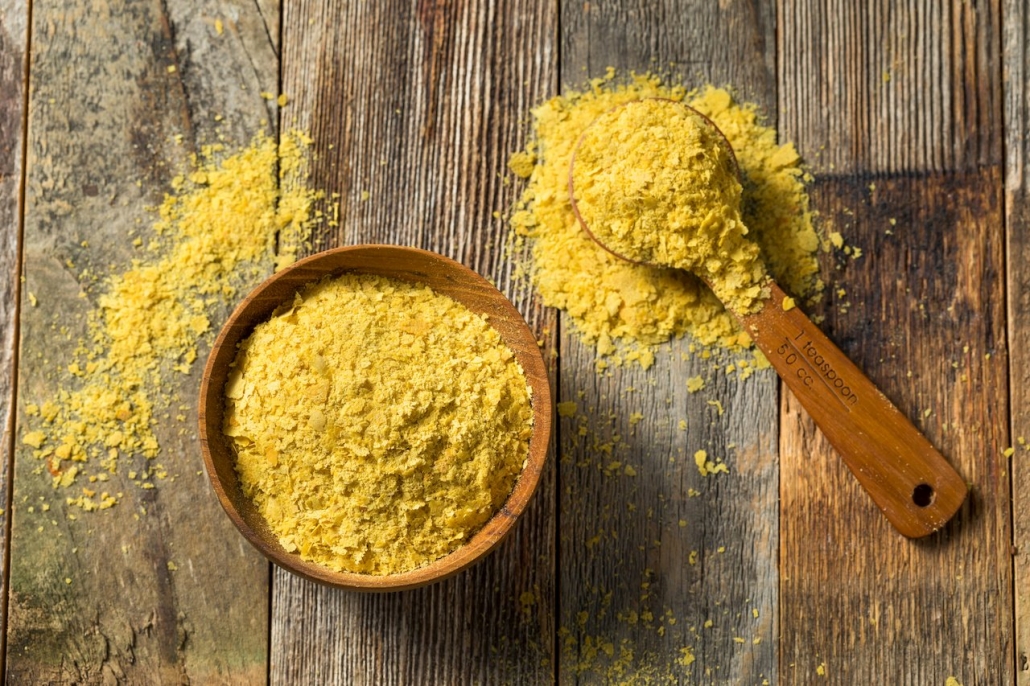
Nutritional yeast has a flavor that’s often described as cheesy, nutty, and savory. Just a tablespoon or two can add richness to soups and casseroles, while larger amounts can make dairy-free “cheese” sauces actually taste… well, cheesy. It’s typically sold in flakes or powder, and both blend beautifully into hot foods.
“Nutritional yeast is a food additive made from a single-celled organism, Saccharomyces Cerevisiae, which is grown on molasses and then harvested, washed, and dried with heat to kill or “deactivate” it. Because it’s inactive, it doesn’t froth or grow like baking yeast does so it has no leavening ability. Don’t worry; no animals are harmed in this process because yeasts are members of the fungi family, like mushrooms, not animals.” (Source: Fat Free Vegan Kitchen)
AIP Compliant or Not?
Here’s where things tend to get confusing.
Many people ask whether nutritional yeast is AIP compliant because some early gluten-free and autoimmune food lists flagged yeast as a potential gluten cross-reactive food. Naturally, that raised concerns — especially for anyone avoiding gluten for autoimmune reasons.
However, when you dig into the research behind those claims, things get less clear.
The evidence suggesting yeast is a true gluten cross-reactor is limited and inconclusive. As explained by Eileen Laird of Phoenix Helix in her work on gluten cross-reactivity, some studies weren’t able to determine whether immune reactions were caused by yeast itself or by gluten contamination in the tested samples.
“In some cases, it isn’t clear whether the immune response is due to true cross-reactivity or to gluten contamination of the food being tested.”
— What is Gluten Cross-Reactivity?
Eileen Laird, Phoenix Helix
That distinction matters. If the issue is contamination rather than the yeast itself, then the practical concern becomes how the product is made, not whether yeast is inherently problematic.
Because of this uncertainty, most AIP practitioners now take a practical, risk-reduction approach rather than a hard yes/no stance.
Bottom Line
If you choose to use nutritional yeast, make sure it is certified gluten-free and non-fortified.
Gluten-free matters because of potential cross-contamination during manufacturing.
Non-fortified matters because many nutritional yeast products are fortified with synthetic B vitamins and folic acid, and fortified versions are often grown on corn or corn-derived substrates — both of which are generally avoided on the AIP.
Notes From a Trusted Brand
This is why some brands intentionally avoid fortification altogether. Sari Foods explains their reasoning clearly:
“Most nutritional yeast products are fortified with excessive amounts of synthetic vitamins to increase the nutritional count. At Sari Foods Company, we believe that synthetic, man-made vitamins are not only unnecessary , but that they can be harmful and toxic to our bodies, causing nutrients imbalances and forcing our kidneys and liver to work overtime while our bodies struggle to absorb them.”
My Best Advice:
As with everything — whether it’s technically AIP compliant or not — not every food agrees with every person or every condition.
If you’re dealing with issues like Candida or yeast overgrowth, mold exposure, or you simply feel unwell when using nutritional yeast, it’s probably best to skip it. That reaction isn’t uncommon, and it’s your body giving you useful information.
That said, if you’re missing the flavor of cheese and want to experiment, nutritional yeast can be worth a try — carefully.
If you do want to try it, keep it simple:
- choose gluten-free, unfortified
- start small
- don’t stack it with other new foods
- and listen carefully to how your body responds
If you don’t feel good after using it, that’s your answer — Cheesy flavor is optional. Feeling awful is not.
Where to Buy:
You can find AIP compliant nutritional yeast in my AIP Storefronts on Amazon (click here for the USA / Canada and the UK) – always be sure to check ingredient labels to be sure.
Looking for Recipes?
If you’re looking for recipes that use nutritional yeast for that cheesy flavor — think AIP cheese sauce, queso, or even AIP mac and “cheese” — head over to our Facebook Group and use the Group Search Feature.
Try searching: “nutritional yeast,” “cheese sauce,” “queso,” “mac and cheese,” and yes, even “mozzarella” or “parmesan!”
You’ll find plenty of real-world experimentation and feedback from people walking this path right alongside you.