
Why the AIP is Dairy Free
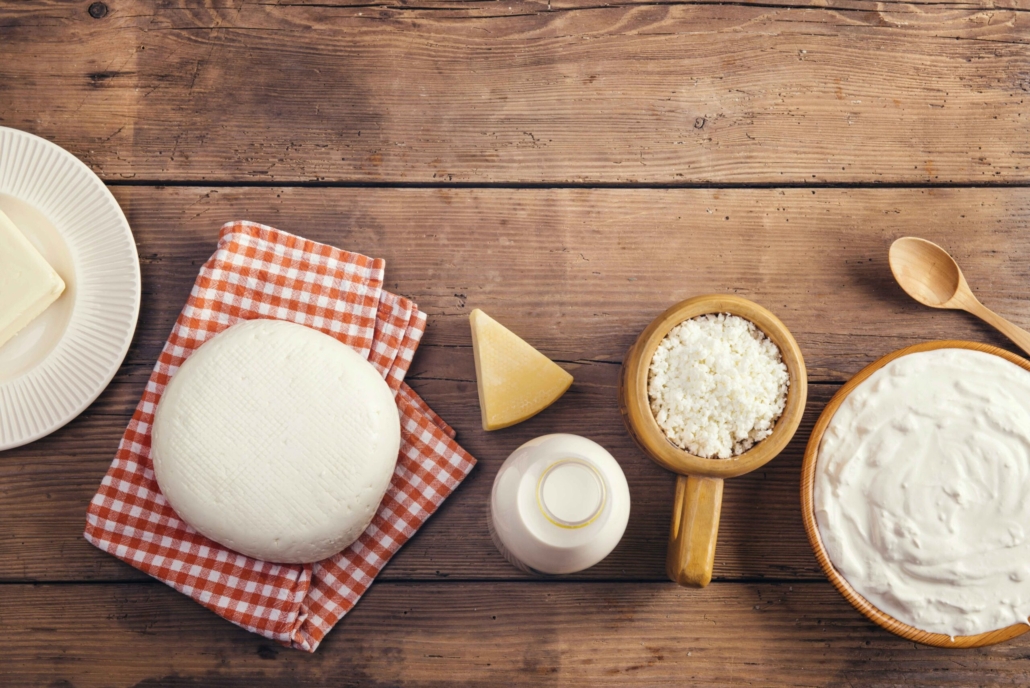
If you’re starting the Autoimmune Protocol, one of the first things you’ll notice is that dairy is off the table. That can feel a little jarring — especially when you’re probably been told your whole life that milk is essential.
Dairy isn’t removed because it’s “bad.”
It’s removed because it’s a common trigger for people with autoimmune disease.
AIP’s goal is to create a clear, calm baseline for the immune system, and dairy just gets in the way of that for a lot of us.
From here, we’ll break down why dairy can be inflammatory, how butter and ghee fit in, what’s safe to try later, considerations for kids, and where to get your calcium without milk.
SPOILER ALERT: Going dairy free does not mean we have to become calcium deficient — not even close!
Why Dairy Can Be Inflammatory
One of the trickiest things about dairy is that it’s often framed as a quality issue. As in: “It’s only a problem if it’s conventional,” or “Raw, grass-fed, or goat milk fixes everything.” And while quality absolutely matters for many foods, dairy plays by slightly different rules — especially when autoimmunity is in the picture.
The main issue isn’t the fat, the farming, or even the lactose. It’s the proteins.
Dairy contains proteins like casein and whey that can be highly immunogenic for some people, meaning the immune system reacts to them as if they’re a threat. For those with autoimmune disease, that reaction doesn’t always show up as immediate digestive drama. Sometimes it looks like joint pain the next day, lingering fatigue, skin flares, brain fog, or symptoms that feel frustratingly disconnected from food.
Even “gentler” dairy options like raw milk, grass-fed butter, A2 or goat milk — still contain proteins that can cross-react with our own tissues in susceptible individuals.
There’s also the gut piece. Dairy proteins can increase intestinal permeability in some people, which matters because a leaky gut is one of the key ingredients in autoimmune activity. Even small, repeated exposures can keep the immune system stirred up enough to slow healing — and that’s true regardless of how ethically raised the cow was.
A Bit About Butter & Ghee
If you’ve spent any time around the AIP, you’ve probably noticed that butter and ghee tend to get a little side-eye instead of a hard no. That’s not random.
Butter and ghee are mostly fat, not protein. Since the immune reactions we worry about with dairy are primarily triggered by proteins like casein and whey, removing those proteins changes the equation. Ghee goes one step further — it’s clarified butter, meaning the milk solids are removed entirely. When it’s made well, ghee contains virtually no dairy protein at all.
That’s why ghee is often one of the first dairy-adjacent foods people experiment with after elimination.
Butter still contains small amounts of milk protein, so it tends to cause issues for more people than ghee, but far fewer than milk, yogurt, or cheese. For some, butter feels fine. For others, it’s a quiet trigger that only shows up as joint pain, fatigue, or a low-grade flare a day or two later.
This is why AIP treats these foods cautiously rather than enthusiastically. They’re not essential, they’re not required for nutrient adequacy, and they don’t offer anything you can’t get from non-dairy fats — so there’s no rush. If and when you try them, it’s about observation, not permission.
Missing butter? No worries, check out the options here.
Goat Milk & A2 Dairy
Goat milk and A2 dairy often get marketed as the solution for dairy sensitivity, and for some people, they genuinely are easier to tolerate. The casein structure is different, and many people digest these forms more comfortably than conventional cow’s milk. That matters — but it doesn’t make them automatically AIP-friendly.
From an immune perspective, these foods still contain dairy proteins, and those proteins can still stimulate an immune response in people with autoimmune disease. The reaction might be milder or slower, but “less reactive” isn’t the same thing as “non-reactive.”
That’s why goat milk and A2 dairy don’t belong in the elimination phase. They’re considered reintroduction foods, not foundational foods. Some people do wonderfully with them later on. Others realize they feel better without them long-term, even if digestion seems fine.
AIP isn’t trying to convince you that everyone should avoid dairy forever. It’s trying to help you figure out your line — without assuming tolerance just because a food has a better reputation.
But What About Kids?
This is usually the point where the conversation shifts from “I can do this” to “Is this safe for my child?” And honestly, that concern makes sense. We’ve been told over and over that kids need dairy to grow strong bones, so removing it can feel like you’re taking something essential off their plate.
Here’s the reality: children do not require dairy to grow well, even though dairy is a convenient source of certain nutrients. Calcium, protein, fat, and vitamins needed for growth can all come from non-dairy foods — and historically, many cultures raised healthy children without relying on milk at all.
On the AIP, dairy is removed for kids for the same reason it’s removed for adults: it can be inflammatory and immune-stimulating. Children aren’t immune to food sensitivities just because they’re young, and in some cases they’re actually more reactive. The difference is that with kids, AIP should always be approached thoughtfully, with enough food, enough variety, and enough calories — not restriction for restriction’s sake.
Some kids eventually reintroduce dairy, while others feel better without it — both outcomes are completely fine.
So… Where Does the Calcium Come From?
One of the first questions people ask when they start the Autoimmune Protocol is also one of the most anxious ones: “If I’m not eating dairy… how am I supposed to get enough calcium?”
It’s a fair question. We’ve been told for decades that milk equals strong bones, and anything less is basically a fast track to a fracture. So when dairy is off the table, calcium suddenly feels like it’s in hiding — but it’s actually everywhere once you know where to look.
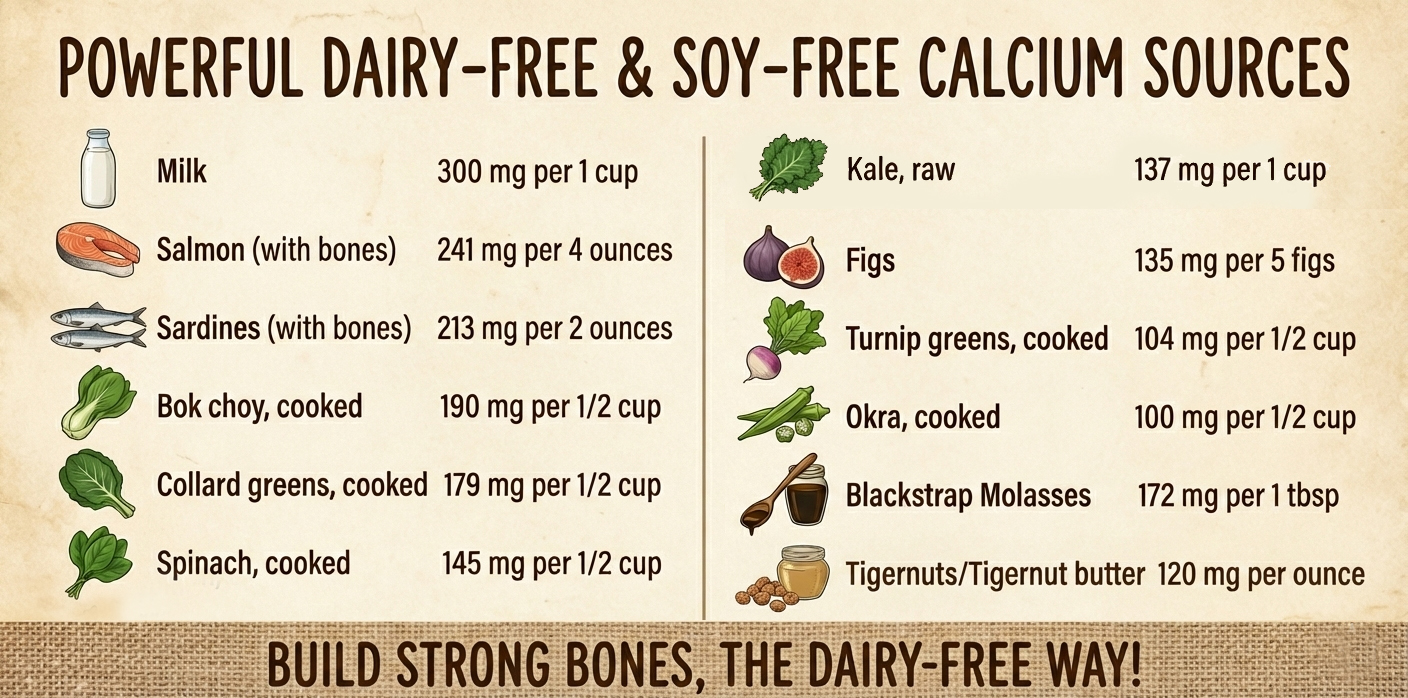
On the AIP, calcium comes primarily from dark leafy greens (like collards, kale, and spinach), sea vegetables, citrus and certain fruits (like figs), bone-in fish (think canned salmon or sardines), bone broth, and even things like blackstrap molasses and mineral-rich water (try adding Concentrace drops, or upgrade your kitchen with a Santivia Water filter with mineral stones). These foods don’t just supply calcium — they come packaged with magnesium, potassium, and trace minerals that help the body use calcium properly.
It’s also worth mentioning that nutrient tracking tools often underestimate calcium on an AIP diet. Homemade foods, bone broth, specific vegetable varieties, and mineral water don’t always show up accurately in databases. So when numbers look low on paper, it doesn’t necessarily mean intake is low in real life.
For both kids and adults, calcium isn’t about hitting one perfect number every single day. It’s about consistent intake from a variety of whole foods, alongside vitamin D, magnesium, and other nutrients that support bone health. When that bigger picture is in place, dairy becomes optional — not mandatory.
Beyond the Protocol: Unexpected Perks of Going Dairy-Free
Even if you don’t have a formal dairy allergy/sensitiviy, skipping milk can come with some surprisingly nice side effects.
- Gentler Digestion: Some people notice less bloating, gas, or tummy discomfort. It’s not just about lactose — the proteins in dairy, like casein, can be tricky for some guts to handle.
- Clearer Skin: Acne or random breakouts can improve once dairy is out of the picture (it sure helped for me). Hormones and inflammation in milk sometimes show up on your skin, so cutting it can be a subtle but welcome change.
- Less Inflammation: Many people with autoimmune issues notice fewer aches, less fatigue, or calmer flares when they remove dairy. Even small improvements can make a big difference in daily energy.
- Easier Breathing: Stuffy noses, post-nasal drip, or seasonal allergy aggravation can quiet down when dairy is removed, leaving you feeling lighter and clearer.
- Simple Weight Support: Dairy can sneak in extra calories, especially in full-fat or flavored forms. Swapping it out can make managing overall intake a little easier — without feeling like a sacrifice.